

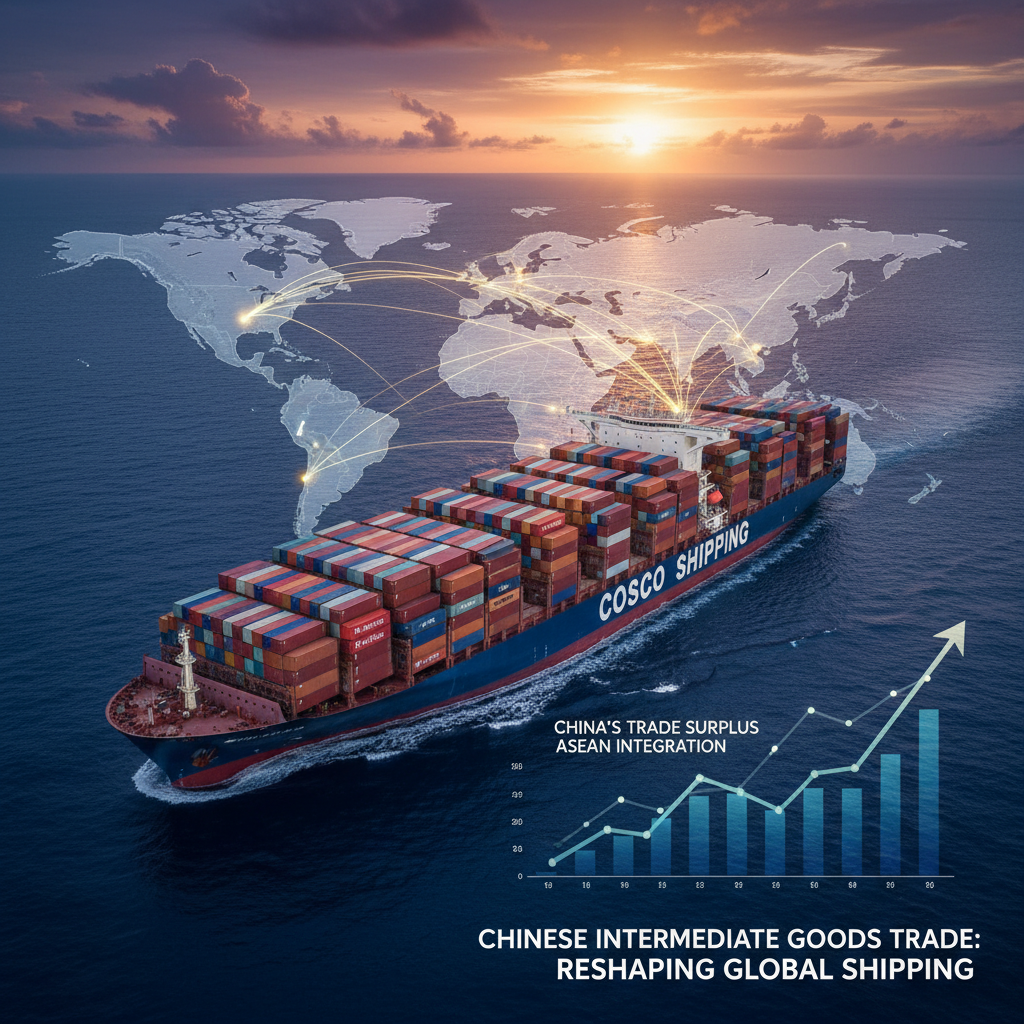
The global shipping landscape is witnessing a structural transformation driven by the Chinese intermediate goods trade expansion. As manufacturers pivot from exporting finished products to building globalized supply chains, China has strengthened its role as a central logistics hub. In 2025, China’s total foreign trade hit a record 45.47 trillion yuan, with a widening trade surplus of $1.19 trillion. This surge is largely supported by the Chinese intermediate goods trade expansion, which supplies crucial components to regions like ASEAN and Latin America.
Recent data indicates that global reliance on China for intermediate goods trade remains robust, reaching 16 percent in recent assessments. This trade resilience is defined by several factors:
- Strategic Market Diversification: Chinese components are increasingly shipped to third-party hubs like Vietnam and Mexico for final assembly.
- Regional Integration: Total bilateral trade between China and ASEAN exceeded the $1 trillion mark in 2025.
- Technological Upgrading: High-tech mechanical and electrical products, alongside green technology components, remain the backbone of outbound shipments.
Under its 15th Five-Year Plan (2026-2030), China has pledged to further expand trade in intermediate goods and optimize overseas distribution networks. For logistics and shipping experts, this Chinese intermediate goods trade expansion signals a permanent shift toward dual-hub supply chain models. Navigating this environment requires agile strategies to manage the flow of high-value components across decentralized manufacturing ecosystems.
References
news.cn, china.org.cn, china-briefing.com, globaltimes.cn, gov.cn