
The landscape of global logistics is undergoing a paradigm shift as Supply chain AI agentic systems deployment accelerates from experimental pilots to core operational strategies. Unlike traditional rule-based automation, agentic AI operates with true autonomy, capable of rerouting shipments, negotiating carrier rates, and adjusting inventory levels in real-time without constant human oversight. As global disruptions continue to test network resilience, industry frontrunners are rapidly moving past reactive planning.
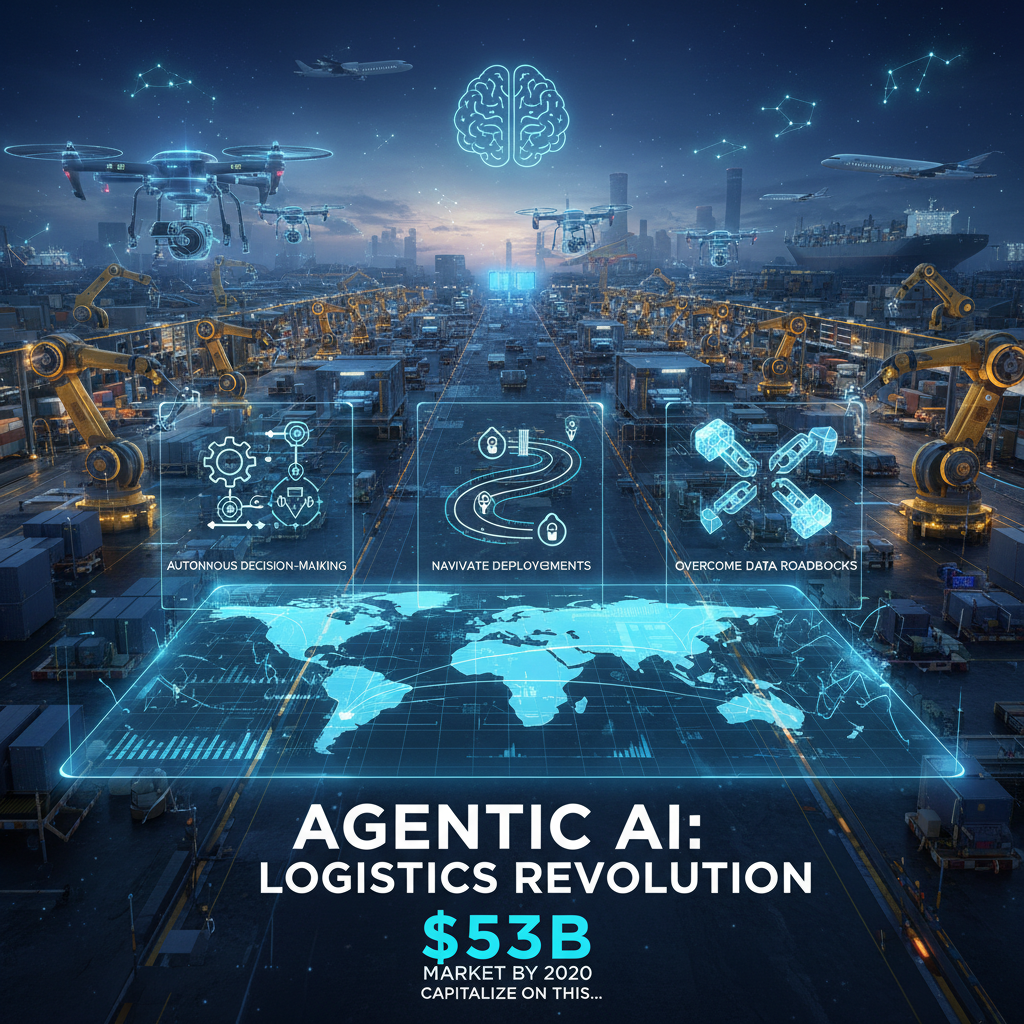
Investment in autonomous decision-making software is skyrocketing. According to a 2026 Gartner forecast, enterprise spending on supply chain management software featuring agentic AI will explode from less than $2 billion in 2025 to a staggering $53 billion by 2030. Furthermore, a recent ABI Research survey of supply chain professionals revealed that 94% of companies plan to integrate AI for decision support within two years, and 76% specifically see immense potential in autonomous AI agents for complex, multi-step tasks like inventory reordering. By 2028, Gartner expects 15% of all daily logistics decisions to be made completely autonomously.
Despite rapid market expansion, successful implementation requires overcoming significant infrastructural hurdles. McKinsey research indicates that 62% of organizations are experimenting with AI agents, but eight in ten report that poor data quality is the primary roadblock to scaling. To maximize the value of these autonomous systems, logistics experts must focus on:
- Establishing high-fidelity data foundations and digital twins to test agent scenarios safely before physical implementation.
- Identifying high-impact workflows such as proactive risk management and procurement forecasting.
- Redesigning talent strategies, as 55% of supply chain leaders expect agentic AI advancements to reduce entry-level hiring needs.
Ultimately, true operational agility belongs to organizations that treat AI agents not merely as cost-cutting tools, but as collaborative partners driving superior decision quality.
References
ABI Research: 2025 Supply Chain Survey Results. Open Sky Group: Supply Chain AI Statistics 2026. Pando: The 2025 State of AI in logistics Report. Inbound Logistics: AI in Supply Chain Statistics. Gartner Forecasts Supply Chain Management Software with Agentic AI. McKinsey: Building the foundations for agentic AI at scale. Gartner Survey Shows 55% of Supply Chain Leaders Expect Agentic AI to Reduce Entry-Level Hiring.