

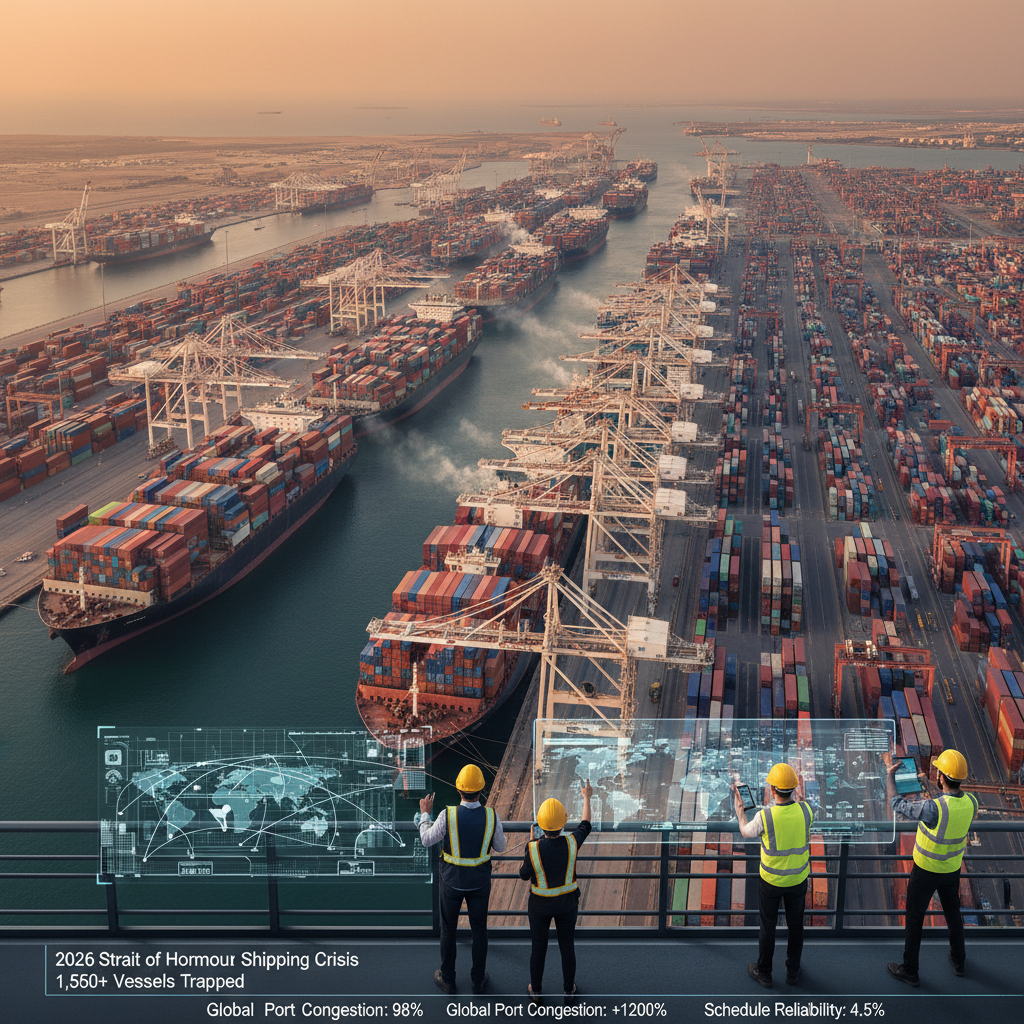
The 2026 Strait of Hormuz shipping crisis is emerging as the most severe supply chain disruption since the pandemic. Following geopolitical escalations in late February 2026, the critical maritime chokepoint effectively closed to commercial traffic, leaving shippers scrambling to mitigate spiraling costs and extensive delays. For logistics experts managing global freight, the operational fallout requires immediate capacity adjustments.
The sheer scale of the disruption is staggering. According to recent maritime intelligence, over 1,550 commercial vessels and 22,500 mariners are currently stranded in and around the Persian Gulf. Container shipping lines are facing extreme asset immobility.
- Of the 53 top-tier container vessels initially caught in the Gulf, 81% remain trapped as of May 2026.
- Regional ports are overwhelmed, with Khor Fakkan locked at 100% congestion and Sohar experiencing a nine-fold increase in average delays.
Schedule performance data reveals a sharp deterioration across Middle Eastern gateways. At the port of Mundra, on-time arrivals collapsed from 44% to 31%, while Nhava Sheva’s rate plunged to just 33%. Consequently, shippers are enduring heavy financial penalties. Container surcharges have spiked between $1,500 and $4,000 per TEU, and ocean transit times have increased by up to 14 days.
Industry leaders, including DHL Global Forwarding, warn that maritime operations will require at least four to six months to normalize. Since the alternative Red Sea route is already operating at 49% below pre-crisis capacity, logistics managers must plan for sustained chaos. Successful mitigation strategies depend on splitting cargo at transshipment hubs like Singapore and securing early space on longer, diverted sailings.
References
carraglobe.com – Strait of Hormuz Closure 2026
kpler.com – Container data on the Hormuz crisis
indexbox.io – Port Congestion and Surcharges
miamialliance3pl.com – 2026 Logistics Outlook