

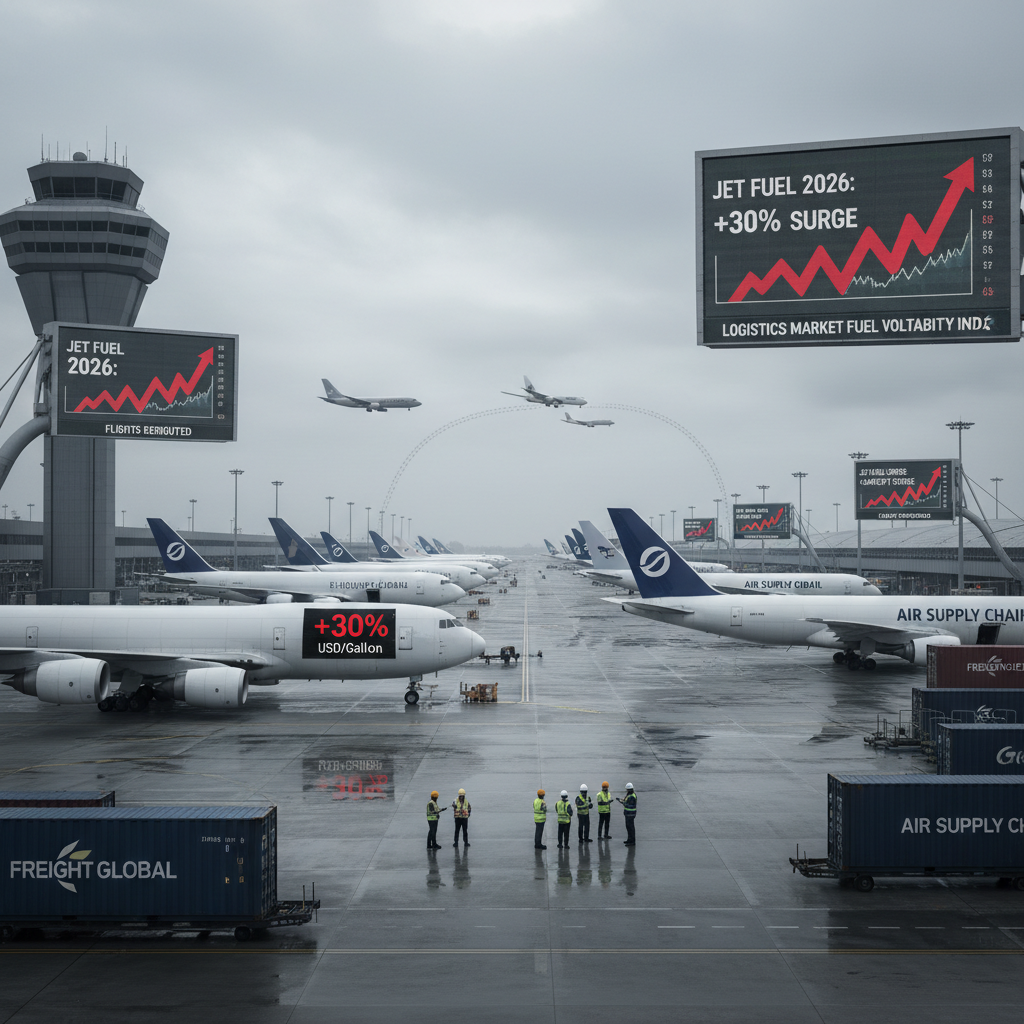
The global logistics landscape is facing unprecedented pressure in 2026 as surging energy markets reshape supply chains. Recent disruptions in the Middle East have caused a dramatic spike in jet fuel prices, creating severe aviation fuel cost impacts on air cargo capacity. As of mid-2026, jet fuel prices skyrocketed by over 106% year-over-year, fundamentally altering how airlines deploy freighter and passenger belly capacity.
Unlike previous years where demand dictated freight rates, fuel volatility is now the primary price setter for global air freight. Airspace restrictions and fuel shortages have forced carriers to reroute long-haul flights, particularly on the Asia-Europe corridor. This increased flight duration requires more fuel burn and reduces effective payload, tightening global supply and worsening aviation fuel cost impacts on air cargo capacity.
- Global air cargo demand fell 4.8% year-over-year in March 2026 due to regional disruptions.
- Middle East capacity remains significantly constrained, dropping nearly 30% compared to pre-conflict levels.
- Global spot rates surged 30% in April 2026, reaching $3.34 per kilogram.
Industry experts warn that these market pressures are unlikely to resolve quickly. Forwarders advise shippers to build financial buffers rather than searching for pre-conflict base rates. With airlines reducing passenger flights to conserve fuel, sustained limits will continue to highlight the ongoing aviation fuel cost impacts on air cargo capacity throughout 2026.
References: Supply Chain Dive, 2026; IATA Air Cargo Market Analysis, 2026; THT Cargo Logistics, 2026; DHL Logistics of Things, 2026; Metro Global, 2026; The STAT Trade Times, 2026.