

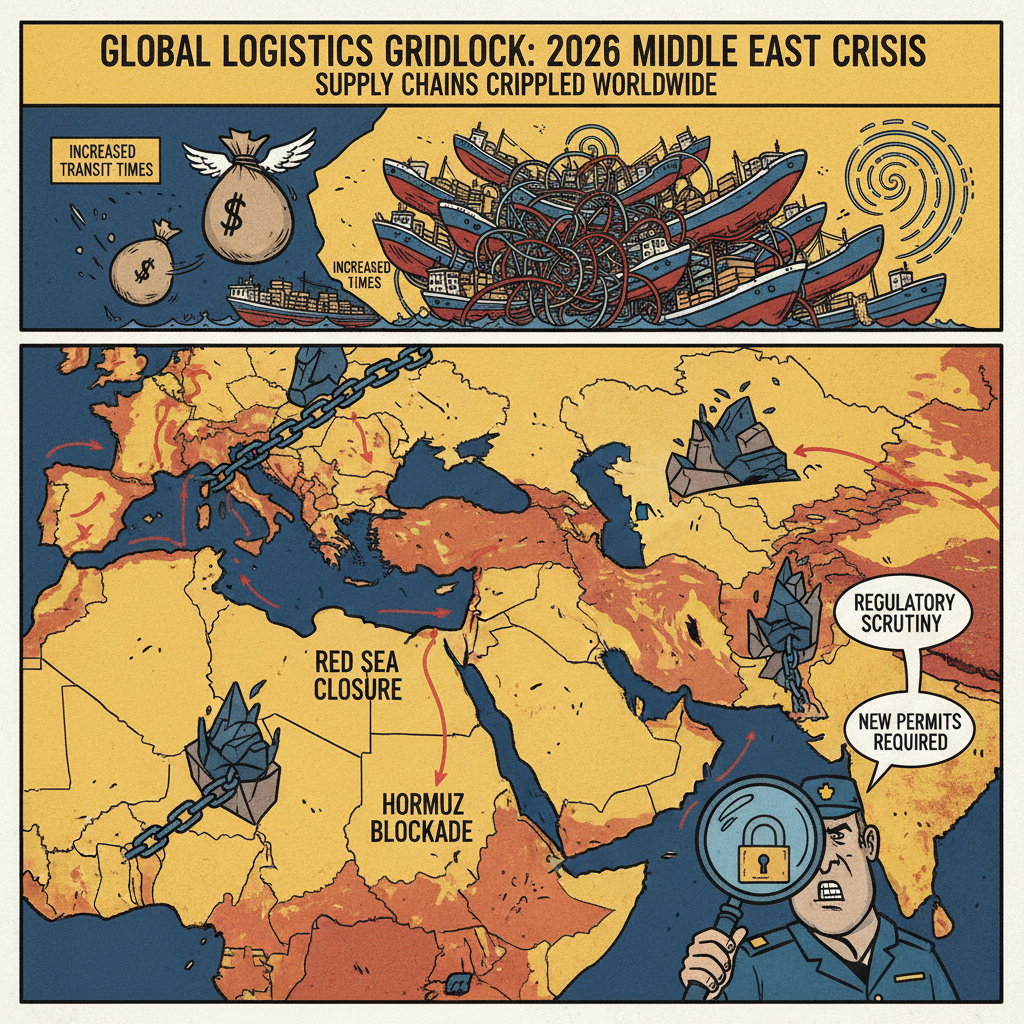
In May 2026, the Middle East supply chain crisis escalated into unprecedented territory, simultaneously disrupting two critical maritime corridors. Following escalating tensions in February, the Strait of Hormuz faced a virtual closure, fundamentally altering global freight dynamics.
Recent data indicates that the current Middle East supply chain crisis is the most severe maritime disruption in modern history. By early May 2026, commercial traffic through the Strait of Hormuz had plummeted to approximately 5% of its pre-conflict average [1]. Concurrently, volatile conditions in the Red Sea have forced extensive rerouting.
- Over 1,550 commercial vessels were stranded near the Strait of Hormuz by May 2026 [1].
- Vessel diversions around the Cape of Good Hope add 10 to 15 days to transit times for Asia-Europe trade [2].
- Regional port schedule reliability collapsed, with on-time performance dropping from 50% to 33% at key transit hubs [3].
Transit delays have triggered massive surges in logistics costs. War-risk premiums have soared, adding up to 1% of total vessel values [4]. In response to the economic fallout, regulatory bodies are intervening. By mid-May 2026, China’s Ministry of Transport initiated crackdowns against top ocean carriers—including MSC and Hapag-Lloyd—citing “opportunistic pricing” and freight rate violations as companies rolled out aggressive Persian Gulf surcharges [5].
References
- [1] Strait of Hormuz Closure 2026: Supply Chain Impact
- [2] Red Sea Shipping 2026: Supply Chain Adjustments
- [3] Xeneta Schedule Reliability Scorecard 2026
- [4] Red Sea Disruption: Cost to Trade in 2026
- [5] The Loadstar: China in new crackdown on carriers