

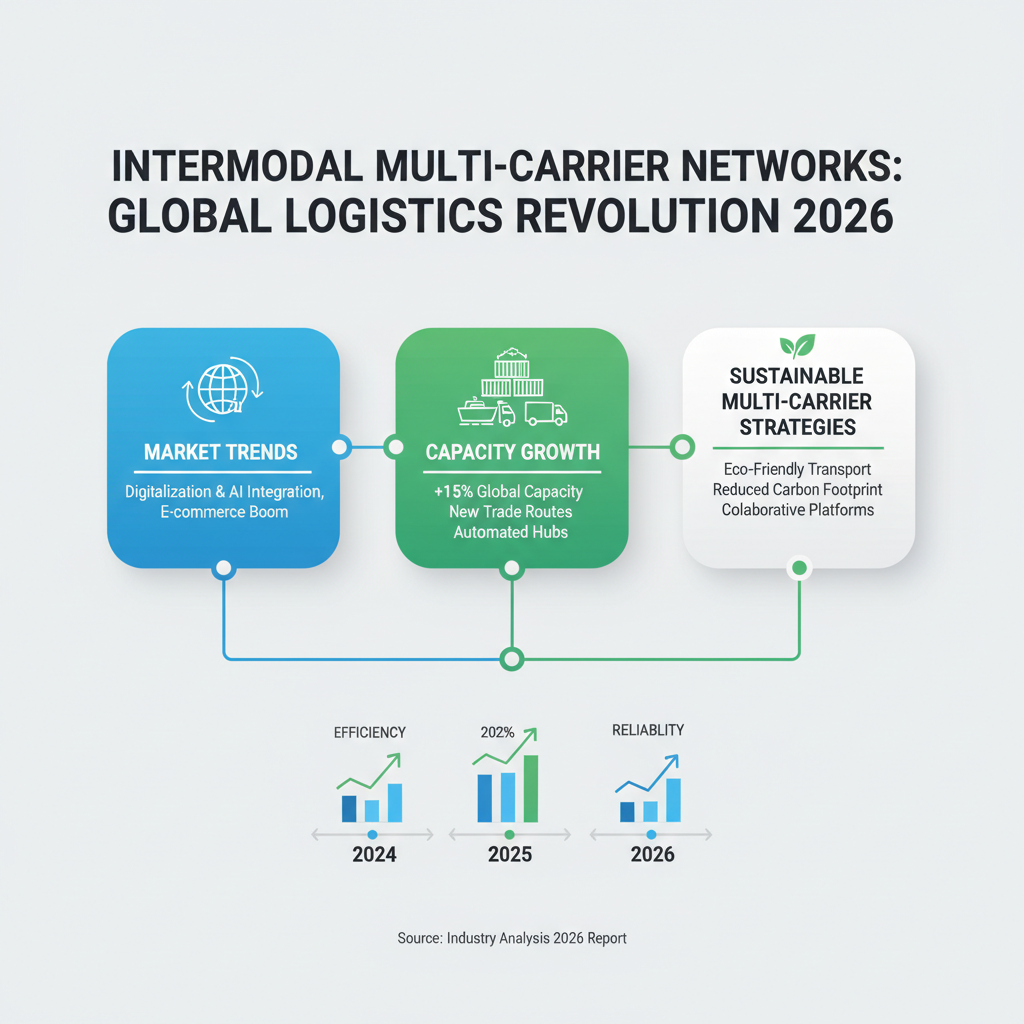
The supply chain is shifting, making Intermodal multi-carrier networks the definitive strategy for 2026. Scalable e-commerce demands have exposed the vulnerabilities of single-carrier reliance. By dynamically blending rail, ocean, and road capacities across multiple operators, intermodal multi-carrier networks offer unmatched resilience. The global intermodal freight market is forecast to reach $155.9 billion by 2031, growing at a 15.09% CAGR. This growth is driven by digital tools empowering seamless cargo transitions.
In an era of dynamic pricing and fluctuating capacity, leveraging Intermodal multi-carrier networks protects margins. Shippers are adopting intelligent solutions to route freight efficiently.
- Cost Optimization: Multi-carrier software automatically selects cost-effective operators, minimizing the impact of fuel surcharges.
- Emission Reductions: Using rail for long-haul and multi-carrier road solutions for last-mile delivery drastically lowers Scope 3 emissions.
- Operational Agility: Cloud platforms enable real-time tracking and rerouting, bypassing localized bottlenecks.
Integrating Intermodal multi-carrier networks is now a critical requirement. Advanced API integrations and AI predictive analytics make managing fragmented carriers highly efficient. Retailers and forwarders must invest in these networks to ensure reliability.
References
Intermodal freight sector set for rapid expansion, FIDI Focus. Why multi-carrier shipping is the new standard, Sendcloud. Achieve Lower Shipping Costs in 2025. Designing a Multi-Carrier Network. Multicarrier Parcel Management Solutions Market Analysis.