
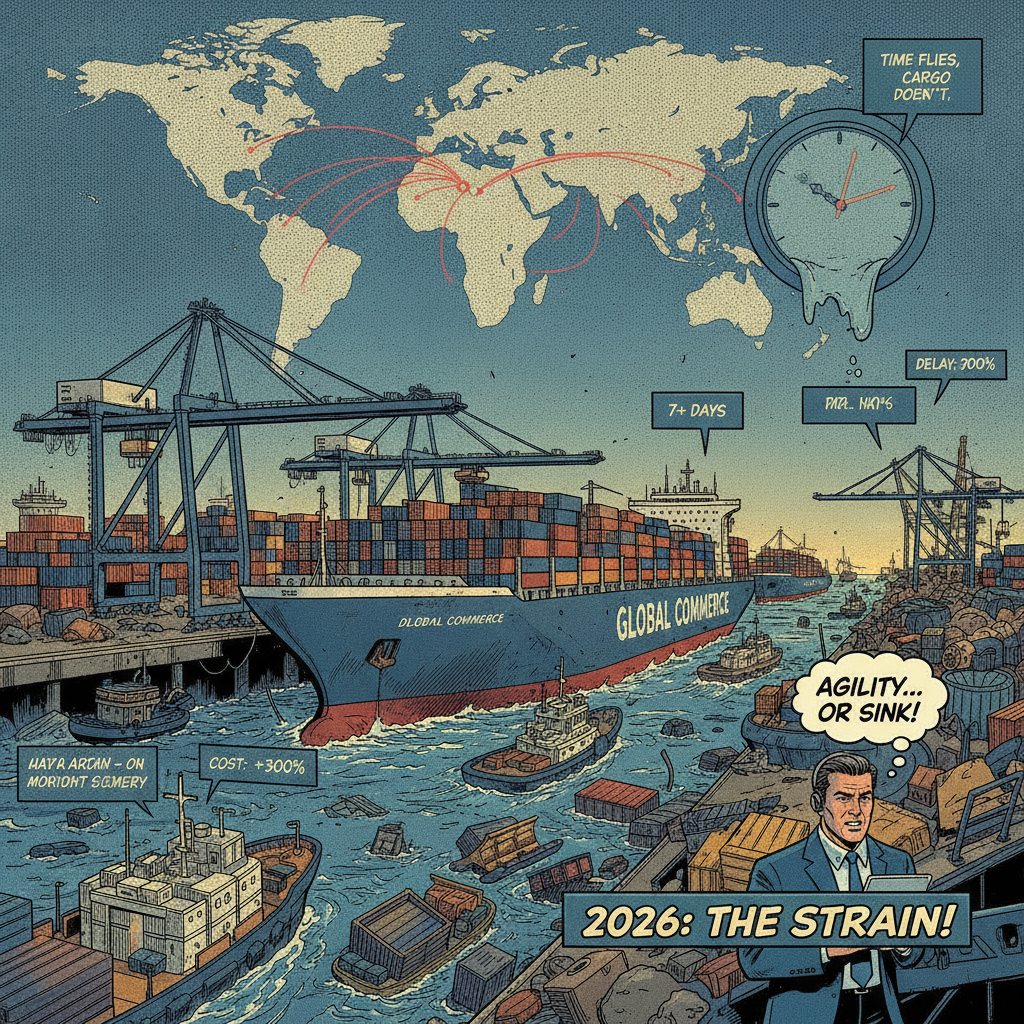
As of mid-2026, global port congestion continues to disrupt international supply chains. Following volume surges that pushed the Port of Singapore to handle a record 44.66 million TEUs in 2025, the transshipment mega-hub is now experiencing severe bottlenecks. Vessel waiting times extended up to 4 to 6 days earlier this year, forcing many vessels into slow-steaming strategies. Simultaneously, Northern European terminals in Antwerp and Rotterdam face mounting pressure, reporting inland barge waiting times of up to four days due to compounding delays and vessel bunching.
This persistent global port congestion has directly inflated shipping costs. In June 2026, the Drewry World Container Index surged to $3,969 per 40-foot container, marking an 18-month high. Transpacific and Asia-to-Europe trade routes are absorbing the heaviest impacts, fueled by Red Sea reroutings, equipment shortages across Asian export hubs, and cargo frontloading ahead of expected tariff adjustments. The Tradlinx Port Congestion Index also highlights volatile operational conditions, with widespread schedule unreliability disrupting downstream logistics.
To navigate the evolving global port congestion landscape, logistics experts are abandoning static planning. Key mitigation strategies include:
- Leveraging real-time supply chain visibility and predictive AI analytics.
- Incorporating buffer times of 14 to 21 days for transshipped cargo through Southeast Asia.
- Diversifying entry points away from congested mega-hubs.
As geopolitical tensions and environmental regulations redefine maritime transport, agile capacity management will remain critical.
References
Drewry World Container Index: https://www.drewry.co.uk
Eurasia Review – Singapore Port Data: https://www.eurasiareview.com
Tradlinx Port Congestion Reports: https://www.tradlinx.com