

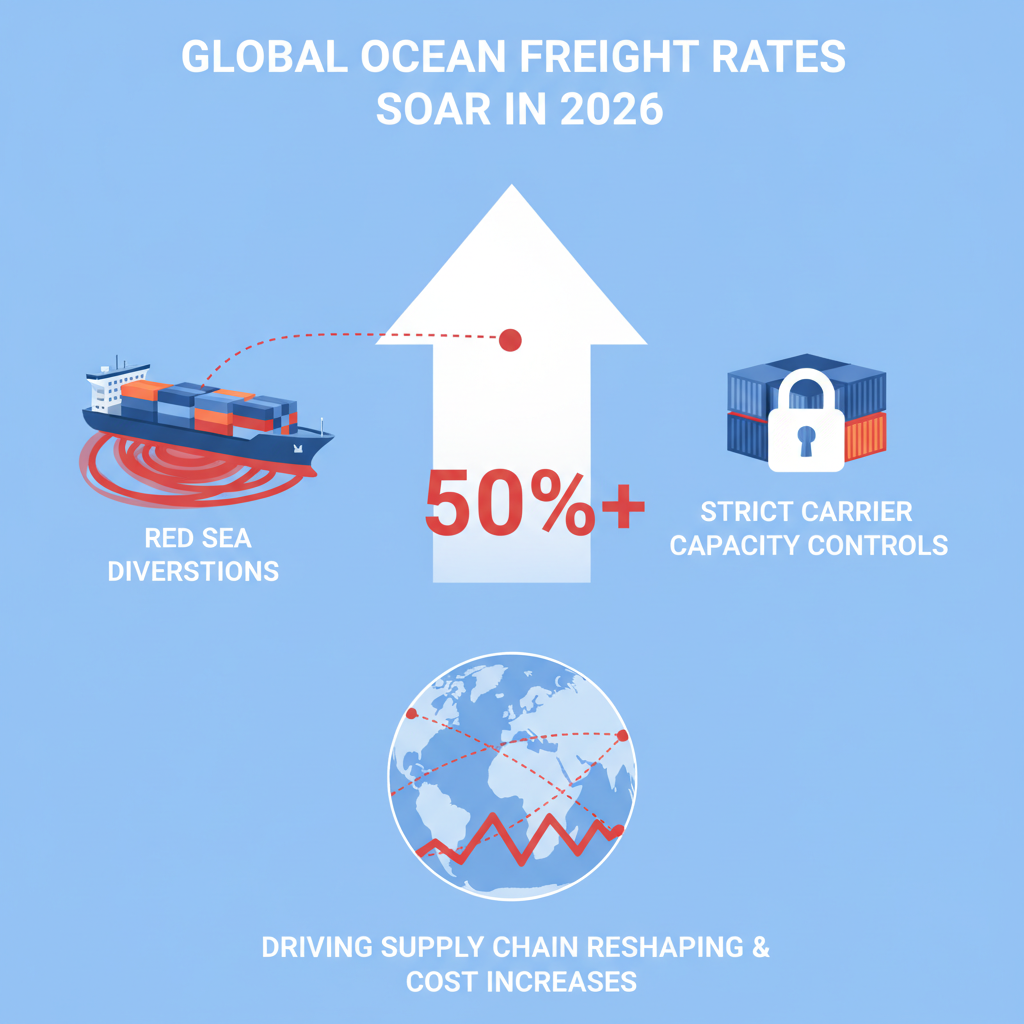
The global logistics landscape is facing immense pricing pressure as unexpected Ocean freight rate surges disrupt 2026 supply chain projections. While analysts initially predicted a stabilized market due to a projected 5 percent increase in global fleet capacity, structural challenges and geopolitical tensions have rapidly reversed the anticipated downward trend. The dissolution of major carrier alliances, ongoing Red Sea route diversions, and strategic capacity management have coalesced to create a highly volatile global pricing environment.
Entering the second half of 2026, shippers are encountering an unusually early peak season that is actively driving up costs across major global trade lanes. Several key factors are sustaining these unprecedented Ocean freight rate surges:
- Geopolitical Rerouting: The persistent Red Sea crisis forces vessels around the Cape of Good Hope, adding approximately 3,500 nautical miles and extending Asia-Europe voyages by ten days.
- Capacity Restraint: Despite new vessel deliveries, major shipping lines are actively executing blank sailings to artificially constrain supply and maintain high pricing floors.
- The Tariff Effect: Evolving trade policies and impending customs duties in North America have triggered a rush to ship, congesting alternative trade lanes.
The financial impact of these constraints is stark for forwarders. The cost of a 40-foot high cube container (40HC) from China to the U.S. West Coast skyrocketed from roughly $2,500 at the end of 2025 to $3,800 by mid-2026, representing a massive 50 percent jump. Similarly, spot rates for Asia-to-Europe lanes have reached up to $4,800 per 40HC, heavily influenced by operational disruptions and environmental compliance surcharges.
For procurement teams, managing Ocean freight rate surges requires moving away from pure spot-market reliance. Closing the gap between spot and contract rates demands early strategic planning, securing long-term contracts, and exploring multi-modal transit options to mitigate exposure to sudden general rate increases.
References
- SeaVantage (2025): 4 Ocean Freight Trends That Will Define 2026 – seavantage.com
- Bofeng Logistics (2026): Why are 2026 shipping rates rising – bofenglogistics.com
- FreightAmigo (2026): GRI Shipping Increase: What Importers and Exporters Need to Know – freightamigo.com