
Containership Registry Reflagging Trends: Navigating the 2026 Strategic Shift
The global maritime industry is experiencing a profound transformation as containership operators reevaluate their registry choices. In 2025 and 2026, Containership Registry Reflagging Trends are increasingly driven by a mix of geopolitical pressures, compliance requirements, and the emergence of new strategic maritime hubs. While over 70% of global tonnage remains under foreign flag registrations, a noticeable shift is underway as shipowners move away from traditional open registries toward robust national and hybrid models.
The Rise of Emerging Maritime Hubs
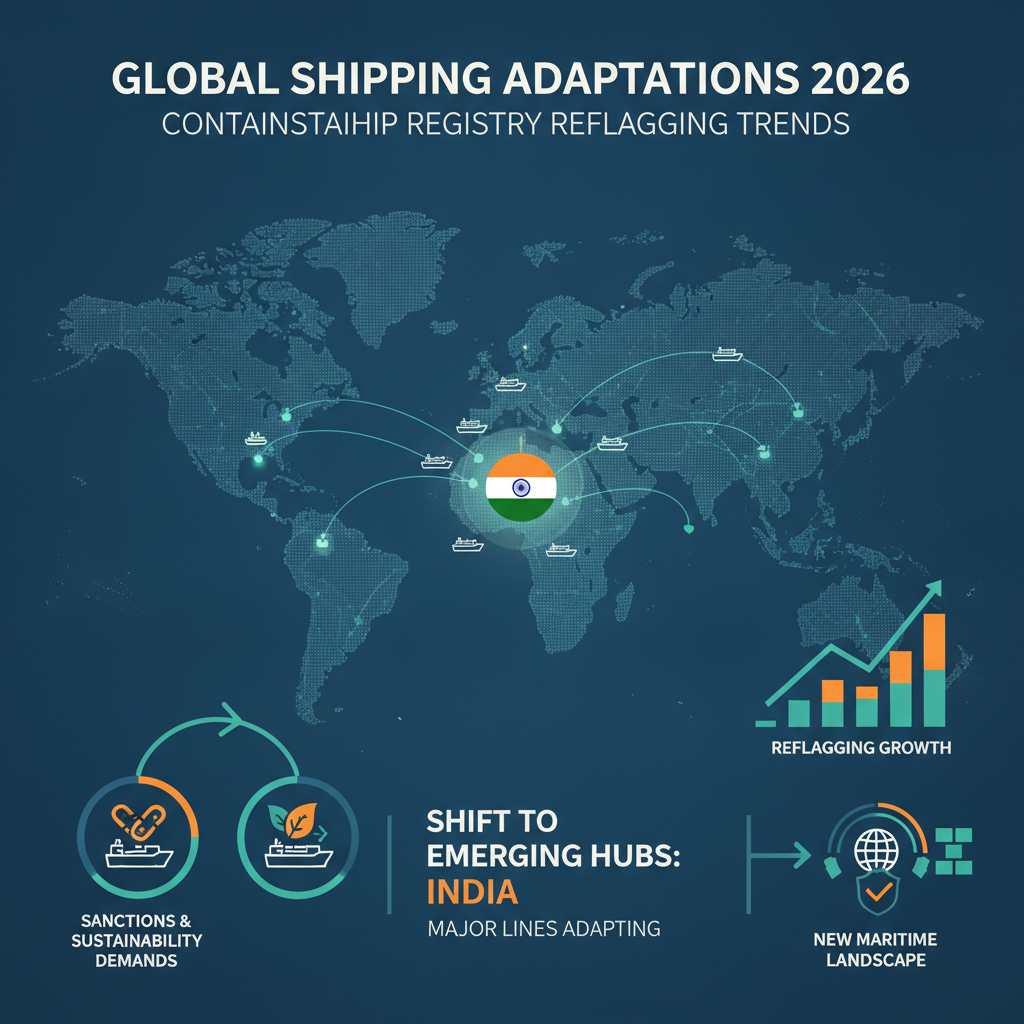
One of the most significant developments is the strategic pivot toward the Indian registry. Global shipping giants, including Maersk, CMA CGM, and MSC, have initiated a wave of reflagging to India, reflecting growing confidence in the nation’s regulatory ecosystem. This transition has bolstered India’s merchant fleet, which now comprises approximately 1,600 vessels with a combined gross tonnage of 14 million tonnes. Furthermore, strategic reflagging is enhancing national security initiatives, as seen with CMA CGM registering its largest container vessel under the U.S. banner to strengthen supply chain resilience.
Geopolitical Pressures and Hybrid Registries
Geopolitical turbulence has also accelerated tactical re-registration. According to the United Nations Conference on Trade and Development (UNCTAD), flag-hopping has intensified, with the average time between a vessel facing sanctions and reflagging dropping by 50% in 2025. To balance fiscal advantages with strict regulatory oversight, operators are adopting hybrid registry systems. Key drivers of these Containership Registry Reflagging Trends include:
- Sanction Evasion and Compliance: Increased enforcement is forcing rapid registry changes to maintain operational viability.
- Environmental Standards: Stricter decarbonization laws are pushing owners toward flags with stronger green credentials.
- Market Access: Reflagging to national hubs often unlocks favorable local taxation and cabotage rights.
Although Liberia, Panama, and the Marshall Islands still account for 45.1% of global capacity, the rise of alternative registries indicates a more fragmented and strategically aligned maritime future.