

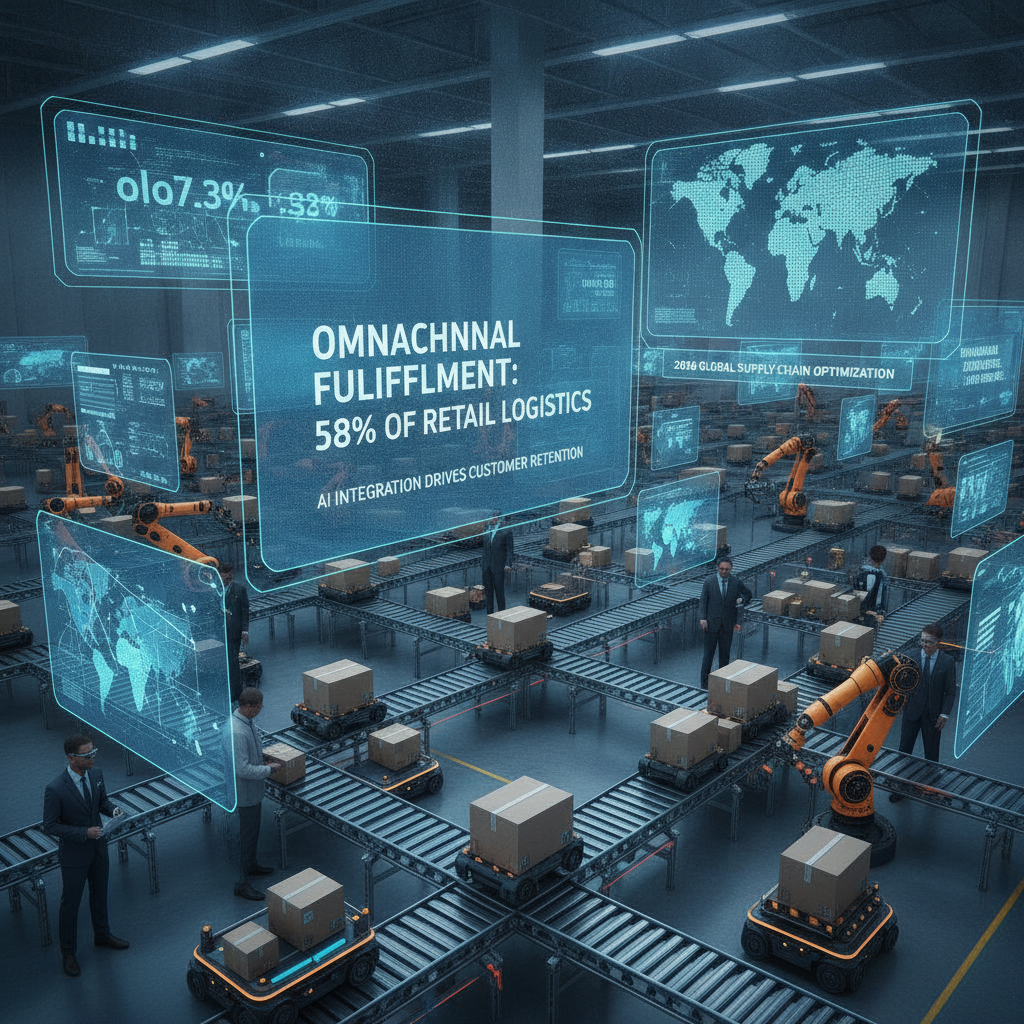
How Omnichannel Fulfillment Operations Redefine Logistics in 2026
As consumer demands for rapid, flexible delivery continue to accelerate, omnichannel fulfillment operations have fundamentally restructured the global supply chain landscape. In 2026, omnichannel distribution has evolved from a competitive advantage into a mandatory infrastructure for logistics providers. Recent industry data reveals that omnichannel fulfillment operations now contribute a staggering 58% of all retail logistics activities. By synchronizing inventory across warehouses, dark stores, and physical retail fronts, supply chain experts are achieving unprecedented flexibility and lowering last-mile delivery costs.
Unifying Omnichannel Fulfillment Operations Networks
The implementation of advanced warehouse simulation and AI-driven order management systems is accelerating globally. The Asia Pacific region has emerged as a dominant force, capturing 35.4% of the global omnichannel order management revenue in 2025, driven by explosive e-commerce growth. To handle this complex scale, logistics operators are heavily investing in technology, with warehouse automation currently deployed in 39% of retail distribution facilities. This technology shift allows third-party logistics providers to optimize inventory placement and efficiently route orders across decentralized nodes to perfect their omnichannel fulfillment operations.
Omnichannel Fulfillment Operations and Measurable ROI
For shipping experts, the return on investment of robust omnichannel fulfillment operations is evident in operational efficiency. Retailers successfully executing omnichannel strategies retain up to 89% of their customers, compared to just 33% for single-channel operators. To achieve these metrics, supply chain leaders are focusing on three key tactics:
- Expanding BOPIS (Buy Online, Pick Up In-Store) to reduce last-mile courier costs.
- Deploying predictive AI to prevent seasonal network stockouts.
- Integrating regional micro-fulfillment centers to accelerate delivery times.
Leading retailers are proving this model at scale, with 2025 reports indicating major brands now fulfill over 65% of digital sales through same-day omnichannel fulfillment operations. By unifying these complex channels, modern logistics leaders are optimizing freight margins and building highly resilient supply chains.