

Decoding Heavy-Lift Project Logistics Market Growth in 2026
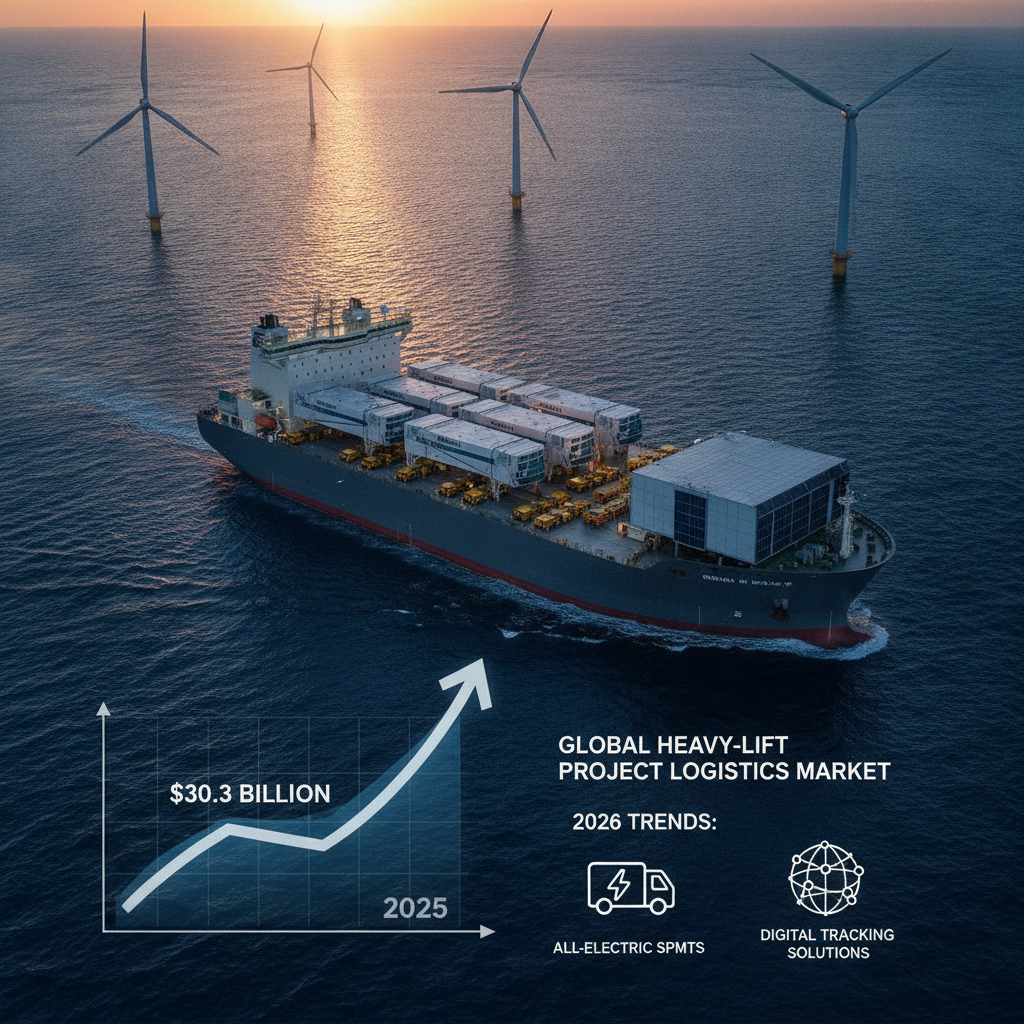
The global landscape for Heavy-Lift Project Logistics is undergoing a rapid transformation. Valued at $29.1 billion in 2024, the market is projected to reach $30.3 billion in 2025 and expand to $45 billion by 2035, driven by a robust compound annual growth rate (CAGR) of 4.1%. This accelerated growth is primarily fueled by the renewable energy sector, complex infrastructure developments, and modular plant construction which increasingly require specialized transport capabilities.
Emerging Trends in Heavy-Lift Project Logistics
Industry leaders are quickly adapting to unprecedented geopolitical shifts and demanding environmental regulations. Subsea decarbonization initiatives alone are driving a substantial $72 billion market through 2030. To maintain a competitive edge, shipping experts must navigate several pivotal trends shaping the sector:
- Sustainable Transport Solutions: The introduction of China-developed all-electric Self-Propelled Modular Transporters (SPMTs) and the deployment of eco-friendly F900 vessels highlight the industry’s pivot toward green logistics.
- Advanced Digitalization: The integration of self-developed Transport Management Systems (TMS) enables 24/7 real-time visibility, intelligent inventory alerts, and dynamic route optimization.
- Rise of Modularization: Shifting towards modular chemical plants is necessitating higher deck capacities and Dynamic Positioning systems, delivering significant cost savings compared to traditional on-site builds.
The Strategic Value of Heavy-Lift Project Logistics
As offshore wind lifecycle management and LNG projects continue to surge, the reliance on specialized Heavy-Lift Project Logistics will only intensify. Stakeholders must prioritize single-window providers that offer end-to-end integrated services, regulatory compliance, and resilient multi-modal transport networks.