
Are Typhoon Dolphin Cargo Backlogs Breaking Asian Supply Chains?
The global shipping industry is facing a severe logistical bottleneck as Typhoon Dolphin cargo backlogs cascade through major East Asian trade hubs. Following the super typhoon’s landfall on the Zhejiang coast on August 9, 2026, critical terminals at Shanghai and Ningbo-Zhoushan were forced into total suspension. Although operations are gradually resuming, the temporary paralysis has triggered a monumental queue of vessels waiting for clearance.
Scale of the Typhoon Dolphin Cargo Backlogs
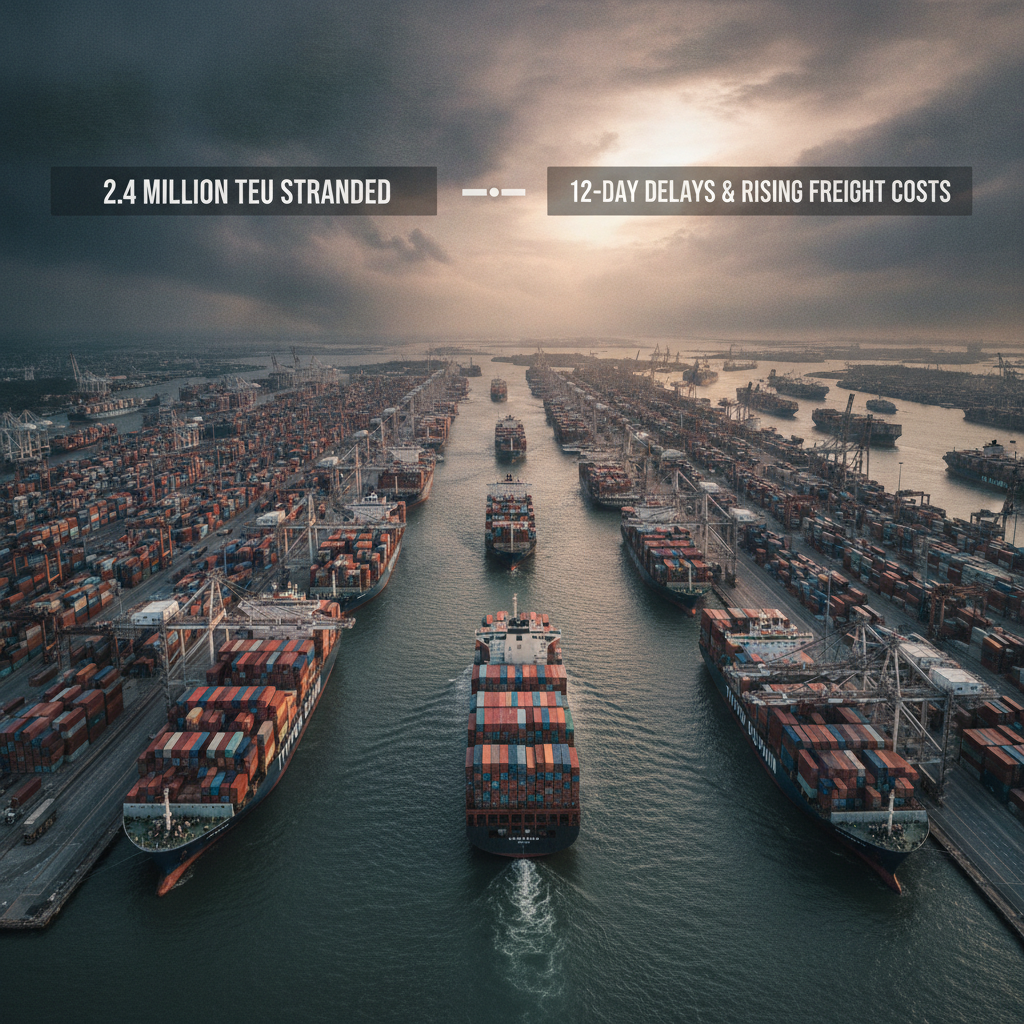
Industry analysts report that the Typhoon Dolphin cargo backlogs have effectively stranded an astonishing 2.4 million TEU of containership capacity in North Asia. This disruption compounds existing pressures, as Dolphin was the third and most powerful storm to strike China within a five-week period. Logistics providers warn that clearing this immense volume could take several weeks. Key operational impacts include:
- Vessel waiting times at Shanghai’s Yangshan port reaching up to 12 days.
- Terminal yard densities operating at dangerously high levels between 75% and 90% capacity.
- Simultaneous disruptions in air freight, with over 1,300 flights canceled at Shanghai airports.
Market Shifts from Typhoon Dolphin Cargo Backlogs
The severity of the Typhoon Dolphin cargo backlogs is already impacting regional shipping costs and scheduling reliability. The bottleneck has tightened equipment availability and caused immediate pricing reactions across regional trade lanes. Notably, Drewry’s Intra-Asian Container Index recently surged by 6%, climbing to $1,028 per 40-foot container strictly due to the Chinese port congestion.
For supply chain professionals, these metrics signal a volatile peak season ahead. Shippers are strongly advised to revise transit time assumptions, prepare for localized equipment shortages, and build extensive buffers into their fourth-quarter supply chain planning.