

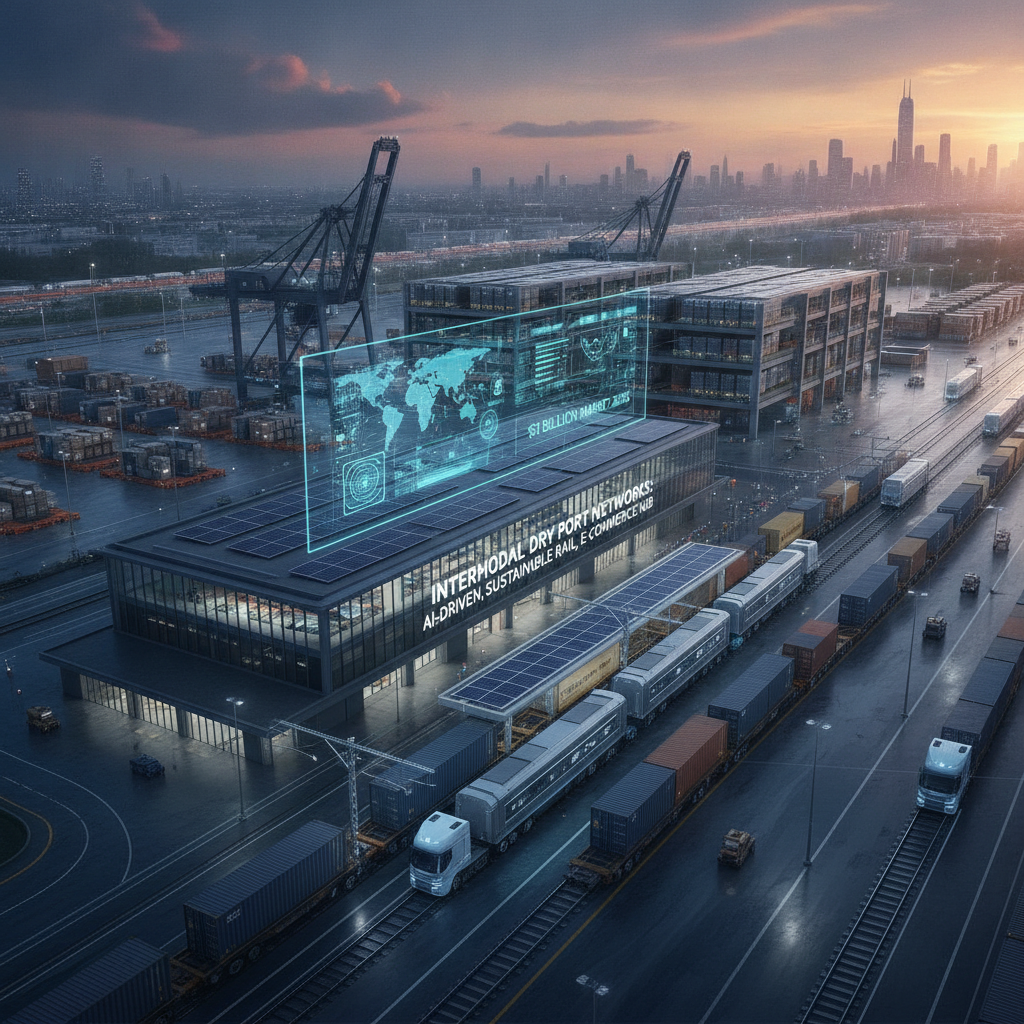
Are Intermodal Dry Port Networks Redefining Global Logistics?
As maritime gateways face unprecedented congestion, Intermodal Dry Port Networks are rapidly evolving from mere storage facilities into sophisticated logistics hubs. These inland terminals are now essential for maintaining seamless supply chain operations and ensuring efficient freight distribution.
Market Growth and Economic Impact
Recent industry analysis indicates substantial growth in this sector. The Inland Container Depot and Dry Port Market is valued at an estimated $31.04 billion in 2025 and is projected to reach $40.48 billion by 2030. This reflects a robust compound annual growth rate (CAGR) of 5.45%. Asia-Pacific currently dominates as the largest market, while North America emerges as the fastest-growing region. Such expansion is largely driven by surging e-commerce demands and the critical need for resilient inland intermodal connectivity.
Key Technological and Sustainable Trends
The modernization of Intermodal Dry Port Networks relies heavily on digital transformation and eco-friendly operations. Facilities are increasingly adopting smart technologies to optimize cargo throughput and reduce operational bottlenecks.
- Digital Integration: AI, automated guided vehicles, and blockchain are enhancing operational efficiency and cargo visibility.
- Decarbonization: Shifting from road-only transport to integrated rail and road systems significantly lowers carbon emissions.
- Value-Added Services: Inland ports now offer light manufacturing, specialized distribution, and advanced warehousing.
By connecting seaports to inland consumer centers, these dry ports are proving to be the backbone of sustainable, resilient freight ecosystems. Experts suggest that data-driven port-hinterland systems will dictate the future of trade.