
The Expanding Crisis in Special Equipment Scarcity
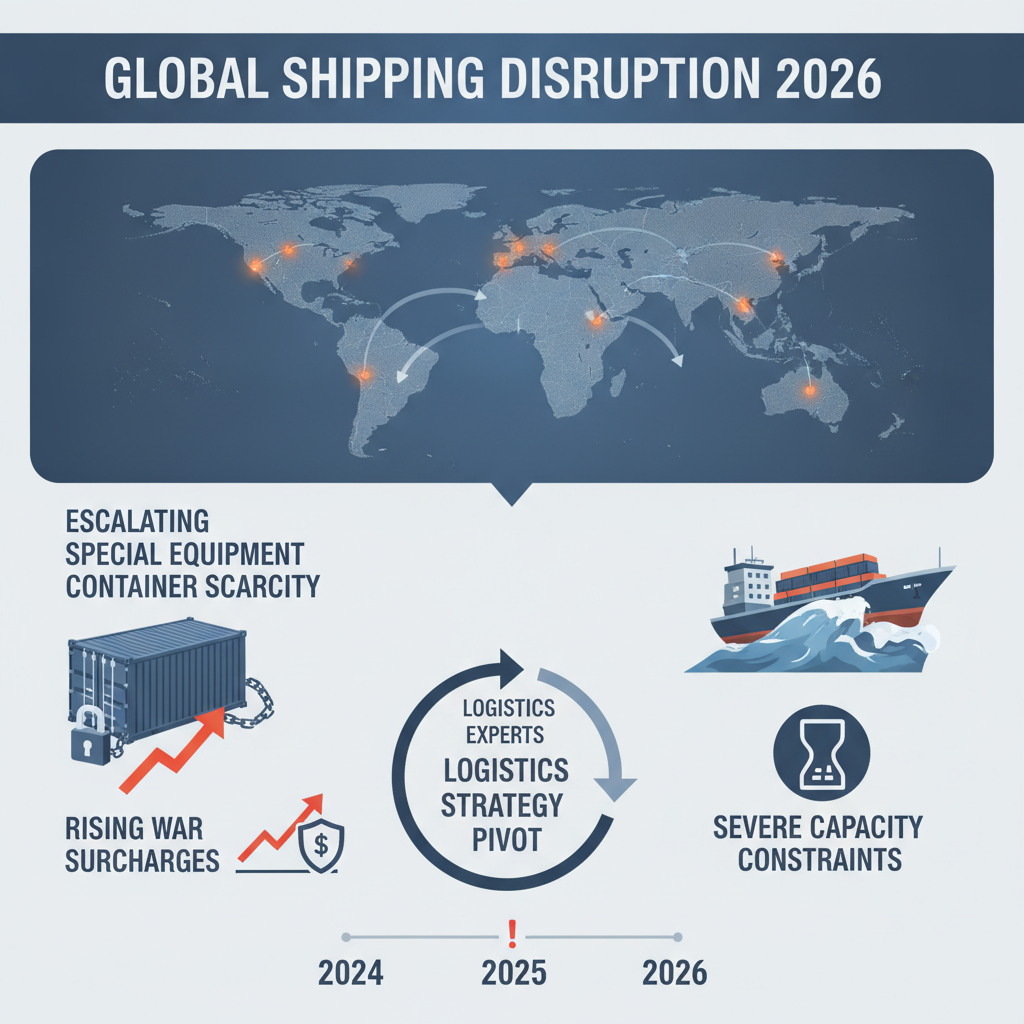
The global shipping sector is grappling with a severe special equipment container scarcity, fundamentally altering logistics strategies in 2026. Specialized units, including refrigerated containers (reefers), flat racks, and open tops, are increasingly difficult to source due to systemic delays and protracted geopolitical tensions in the Middle East. As vessels reroute around the Cape of Good Hope, functional capacity shrinks; industry analyses indicate that 15% to 20% of global capacity was effectively neutralized at peak intervals during 2025, a deficit extending well into 2026.
Geopolitical Strain on Reefers and Flat Racks
Compounding this specialized shipping container shortage are surging war risk surcharges. Major ocean carriers have imposed steep fees to navigate volatile regions. For example, recent trade data shows CMA CGM implementing a staggering $4,000 surcharge per reefer or special equipment container, while Hapag-Lloyd has imposed $3,500 for similar units traversing the Arabian Gulf. Consequently, exporters in major Asian hubs are facing waiting periods of one to two weeks simply to secure specialized equipment bookings. This imbalance is drastically elevating total landed costs for high-value and perishable commodities.
Adapting Logistics Strategies for 2026
To navigate the special equipment container scarcity, supply chain leaders must unlock latent capacity rather than relying on physical asset expansion. Key adjustments include:
- Reducing transshipment dwell times, which reached up to 10 days in key Asian hubs recently.
- Optimizing arrival process times to minimize idle delays at port limits.
- Reconfiguring contracts to accommodate persistent freight rate volatility and localized equipment deficits.
Ultimately, overcoming the ongoing scarcity requires logistics experts to prioritize asset velocity and agile capacity planning over traditional baseline demand forecasting.