

Navigating the New Era of Battery Logistics Compliance
As global demand for electric vehicles and portable electronics continues to surge, mastering Battery Logistics Compliance has become a critical priority for freight forwarders and shippers. Regulatory bodies are tightening their oversight to prevent severe safety incidents during transit. For supply chain professionals, staying ahead of the 2025-2026 regulatory curve is no longer optional—it is a baseline requirement to avoid crippling airline rejection penalties, customs delays, and severe insurance exposures.
IATA 2026: Battery Logistics Compliance and SoC Mandates
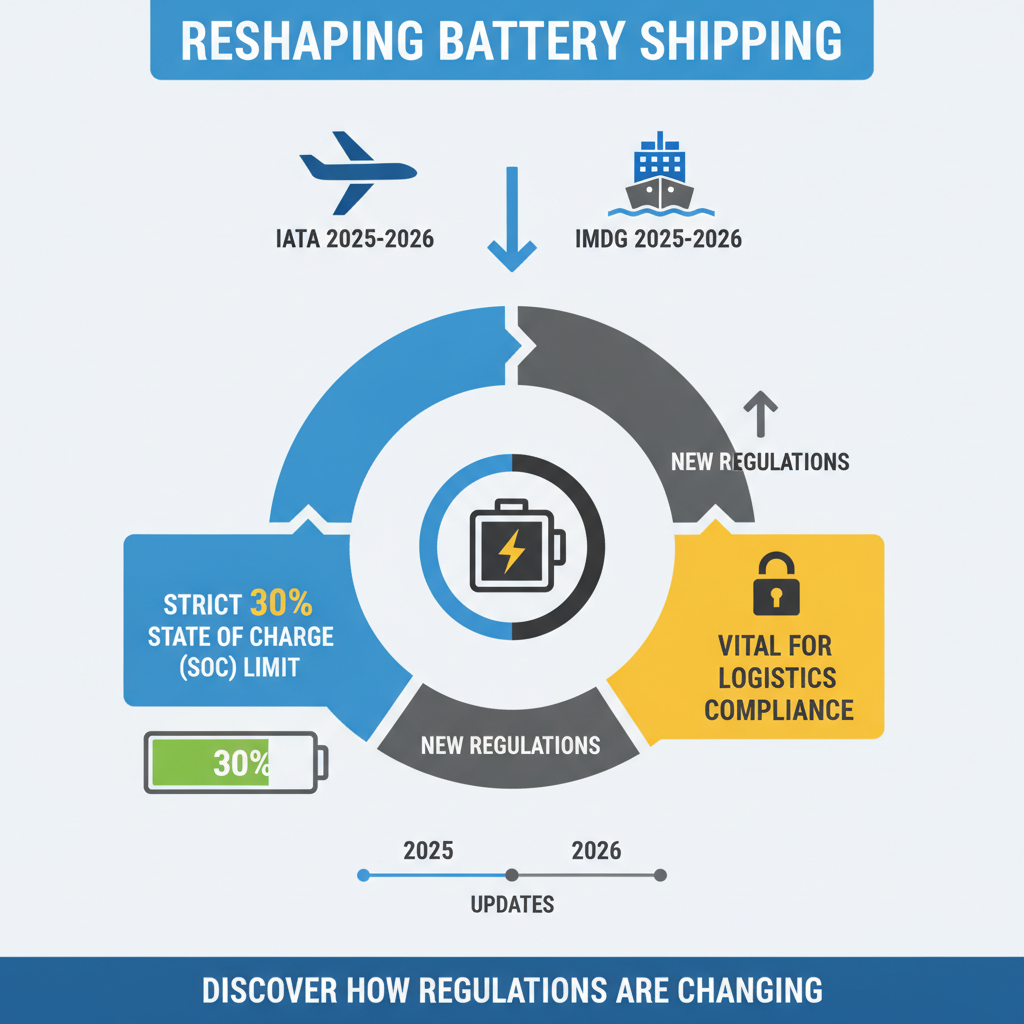
The most significant shift in Battery Logistics Compliance stems from the International Air Transport Association (IATA) and its 66th edition of the Dangerous Goods Regulations (DGR). Beginning in 2025 and becoming fully mandatory by January 2026, air transport of lithium-ion batteries packaged with equipment (PI 966) and contained in equipment (PI 967) faces severe restrictions. Most notably, lithium-ion cells and battery packs must be transported at a State of Charge (SoC) not exceeding 30% of their rated capacity. Shippers failing to implement these SoC limits will require special written approvals from authorities of both the origin country and the operator’s jurisdiction, adding massive administrative friction to logistics networks.
Multimodal Shifts in Battery Logistics Compliance
Beyond air freight, maritime and overland transit authorities are also tightening regulations. The IMDG Code 2024-2026 for ocean freight introduces new guidelines for dangerous goods storage and enhanced packaging onboard vessels. Simultaneously, the ADR 2025 updates for road transport now mandate real-time shipment tracking requirements to mitigate accident risks and enforce advanced training for all handling personnel.
Proactive Strategies for Risk Mitigation
Failure to maintain strict compliance exposes carriers to massive liabilities, including third-party damages and total cargo loss from thermal runaway fires. To maintain seamless operations, logistics experts must prioritize several key areas:
- State of Charge Monitoring: Integrate pre-shipment SoC validation protocols to ensure the 30% threshold is met for air freight.
- Advanced Packaging: Utilize certified shock-absorbing materials and precise UN 38.3 standard labeling.
- Continuous Training: Ensure all warehouse and forwarding staff are updated on the 2026 IATA and IMDG mandates.
By treating these regulations as strategic supply chain components rather than mere hurdles, logistics providers can secure faster customs clearance and optimized multimodal routing.
References:
International Air Transport Association (IATA) DGR 66th Edition and Lithium Battery Transport Regulations Updates (2025-2026).
Industry Insurance Exposures and Liability Reports on Lithium Battery Transport.
Transmile DG Regulations Key Updates for 2025 (IMDG Code & ADR).