
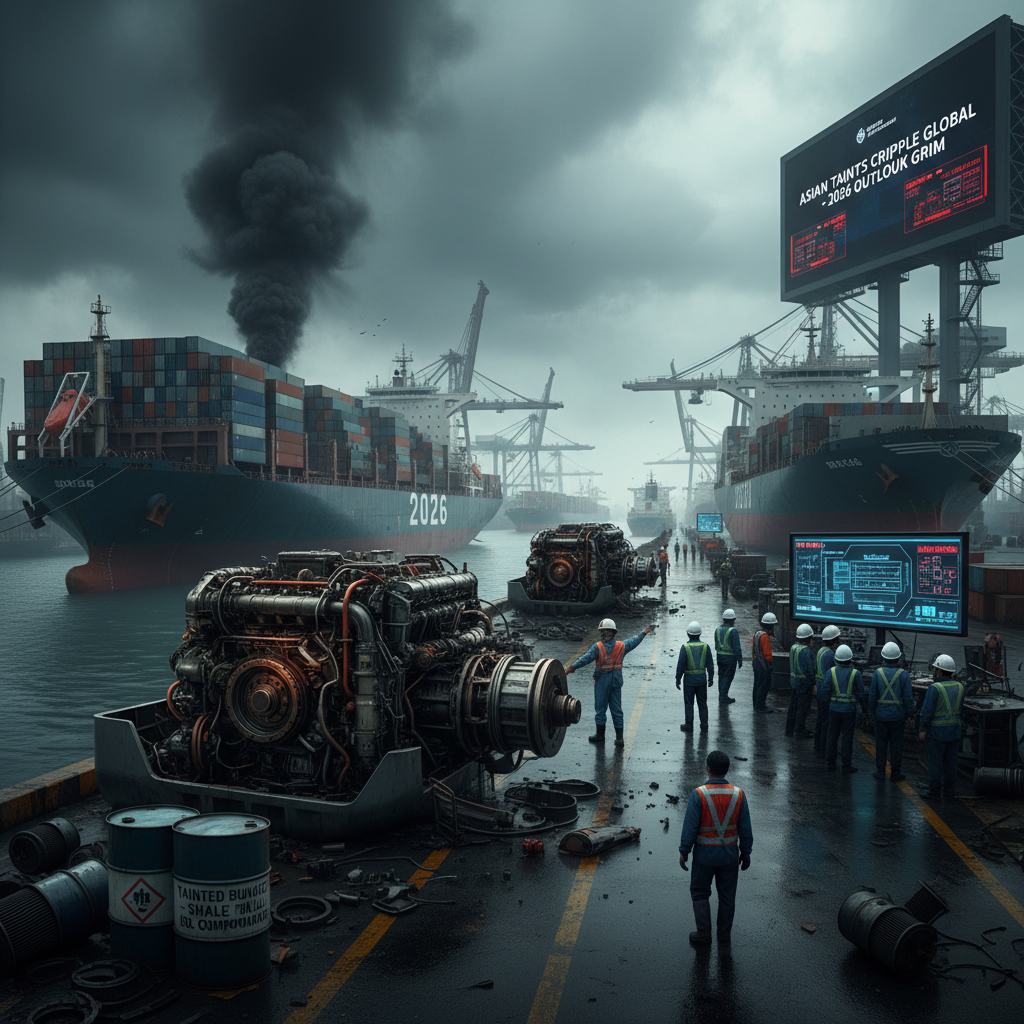
Shipowners operating in the Far East face escalating operational risks as Asian tainted bunker fuel challenges reach critical levels in early 2026. Despite meeting standard ISO 8217 parameters, widespread fuel contamination has been detected across major maritime hubs, including Singapore, Hong Kong, and Malaysia. Marine insurers like Skuld and testing agencies such as Veritas Petroleum Services (VPS) report that advanced gas chromatography-mass spectrometry (GCMS) has exposed hazardous hidden chemical compounds.
Recent fuel samples revealed elevated concentrations of phenolic compounds and alkylresorcinol derivatives, which are consistent with shale oil components. According to recent data from fuel testing experts, hydrocarbon compounds such as dihydro-dicyclopentadiene and indene have spiked to dangerous levels between 5,000 and 14,000 parts per million (ppm). A late 2025 Singapore Shipping Association survey underscored that insurance and liability risks from contaminated fuel are among the industry’s most pressing concerns.
The consequences of these Asian tainted bunker fuel challenges are severe for maritime logistics networks. If unmitigated, high concentrations of these toxic compounds can lead to:
- Sludge formation and severe filter or purifier fouling.
- Fuel injection system failures resulting in auxiliary engine blackouts.
- Costly operational downtime and complex charter party disputes.
To combat this, the shipping industry is heavily pushing for the adoption of the stricter ISO 8217:2024 standards and encouraging comprehensive GCMS fuel vetting before bunkering.
References
- Global Energy Insider: https://globalenergyinsider.com
- Splash247: https://splash247.com
- Singapore Shipping Association: https://ssa.org.sg