
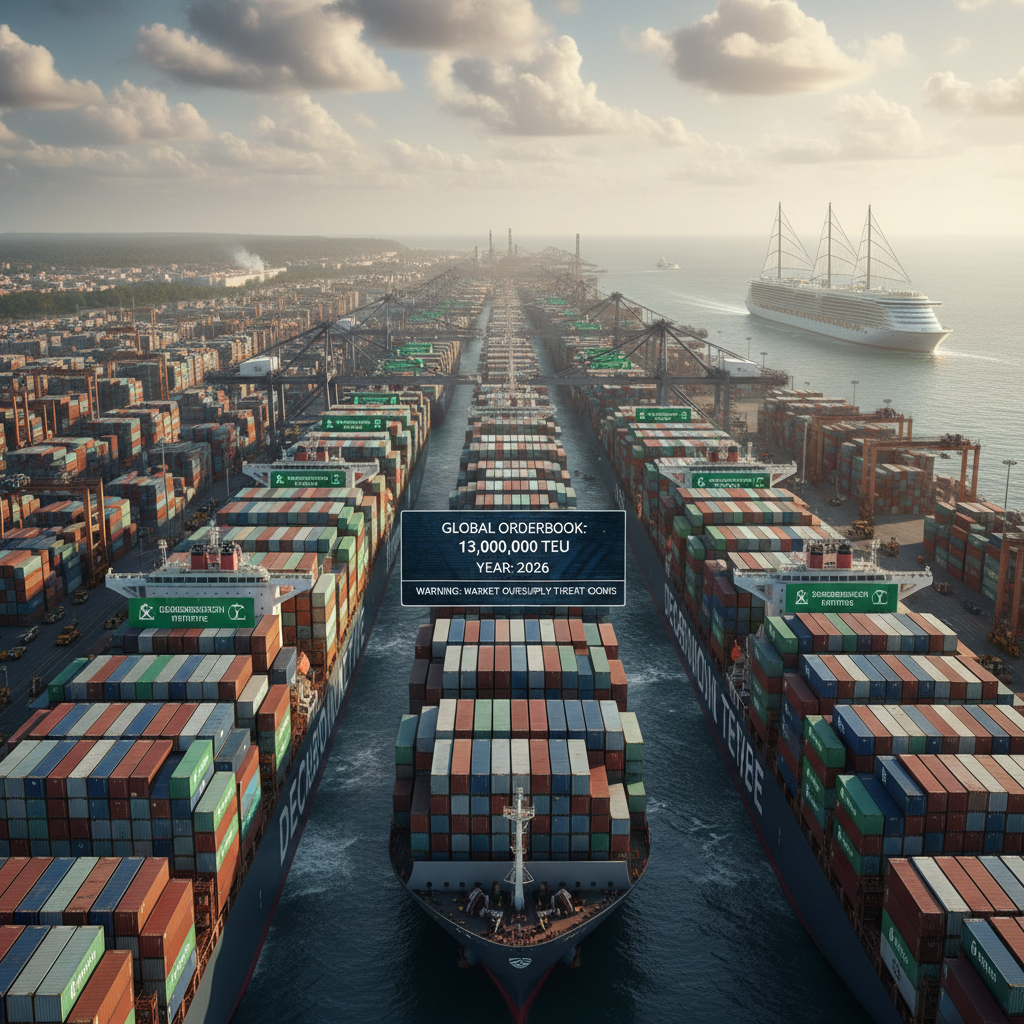
The maritime shipping industry is facing unprecedented capacity expansion, with the Global container ship orderbook record reaching a staggering 13 million TEU by May 2026. This aggressive ordering spree has pushed the orderbook-to-fleet ratio to 38.3%, a peak not witnessed since the 2008 global financial crisis. While ocean carriers are rapidly modernizing their fleets to meet ambitious decarbonization targets, analysts warn of severe impending market overcapacity.
Shipowners have maintained relentless investment momentum despite fluctuating trade volumes. Following a record 5.1 million TEU ordered in 2025, the first four months of 2026 have already surpassed 1.9 million TEU in new contracts. This massive pipeline is largely driven by three key factors:
- Decarbonization Demands: Almost half of the newly ordered tonnage is equipped for alternative fuels, such as LNG and methanol, to comply with tightening carbon intensity regulations.
- Strategic Fleet Renewal: A significant portion of the orderbook features mid-sized and ultra-large container vessels intended to maximize route efficiency and lower per-container emissions.
- Geopolitical Adaptability: Ongoing supply chain disruptions have encouraged carriers to maintain operational flexibility through larger, more versatile fleets.
Despite the influx of modern, eco-friendly tonnage, the sheer scale of the orderbook casts a shadow over future ocean freight rates. With over 5 million TEU scheduled for delivery in 2028 alone, market experts project sustained downward pressure on container pricing. If carriers return to traditional routing and reduce overall transit times, the fundamental supply-demand imbalance could trigger intense market competition.
References
Global Trade Magazine: Container Ship Orderbook Hits Record 13 Million TEU
FIDI Focus: Container ship order book hits historic high
Davies Turner: Containership orderbook reaches new record in 2025
All About Shipping: What Capital Decisions Tell Us About Shipping’s Future