

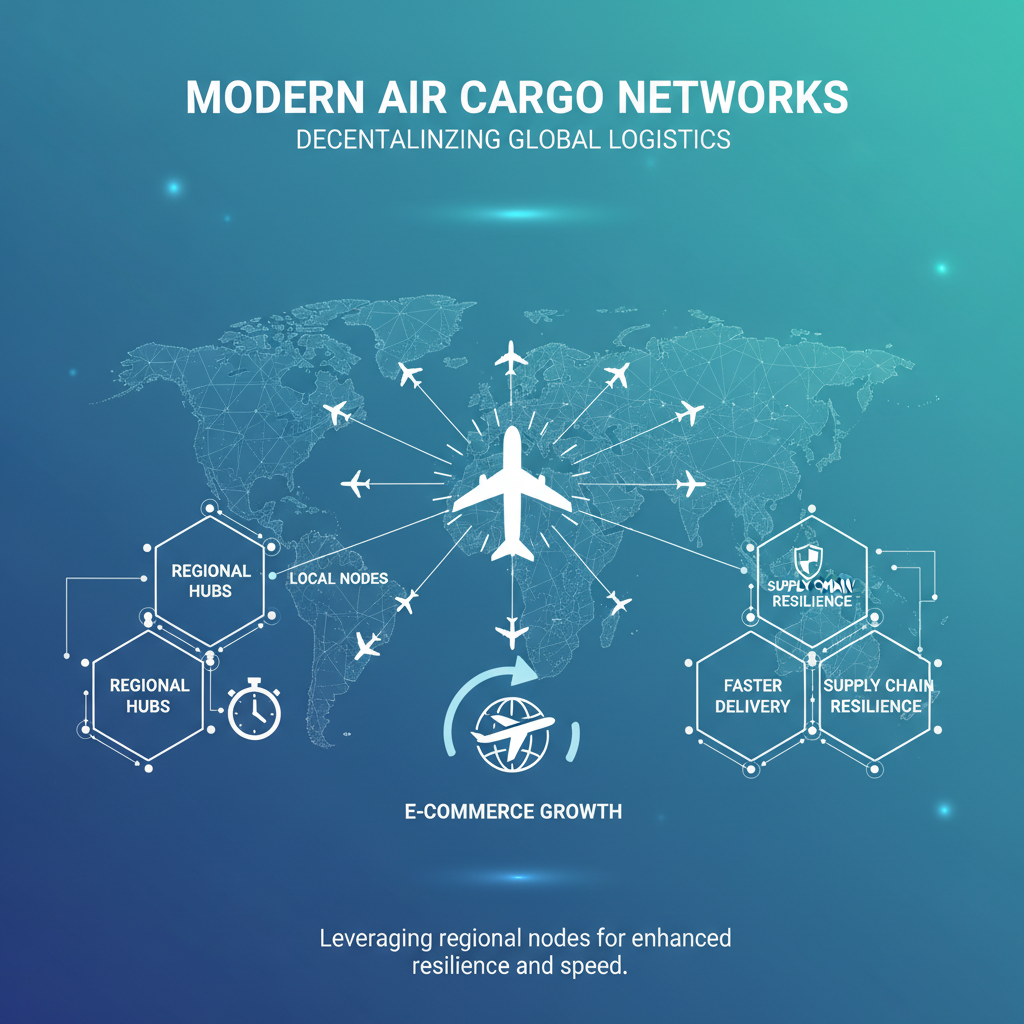
The global logistics landscape is undergoing a profound transformation. As e-commerce demand surges and supply chain disruptions become more frequent, traditional point-to-point routes are no longer sufficient. Consequently, multi-hub air cargo networks have emerged as the premier strategy for building resilient, high-speed freight systems. This decentralized approach leverages regional hubs alongside major international gateways to optimize routing and avoid congestion.
The transition toward multi-hub air cargo networks is backed by compelling industry shifts. E-commerce shipping is projected to exceed 250 million tons globally by 2028, demanding faster turnaround times and unprecedented flexibility. To accommodate this, airlines are pivoting from centralized operations to dynamic, multi-destination strategies. For instance, Southeast Asia is projected to account for approximately 60% of global air cargo growth between 2025 and 2026, driven by a structural shift in manufacturing and cross-border trade.
Logistics professionals are rapidly adopting multi-hub structures for their proven operational benefits. This strategy mitigates risk by reducing reliance on a single, easily congested primary airport.
- Enhanced Resilience: If one node experiences weather delays or geopolitical disruptions, cargo is dynamically rerouted through secondary hubs.
- Cost Efficiency: Utilizing secondary regional facilities often yields lower landing fees and reduced ground handling times.
- Faster Last-Mile Delivery: Positioning inventory and freight closer to final destination markets accelerates regional fulfillment.
Integrating artificial intelligence and digital cargo corridors is crucial for managing these complex webs of connections. Advanced capacity management tools and predictive analytics allow forwarders to seamlessly synchronize multi-hub air cargo networks. As digital twins and API-based booking systems become industry standards, the efficiency of hub-and-spoke routing will only improve. Ultimately, matching the right aircraft and regulatory policies to decentralized hubs will define the next decade of air freight.
References
Sunrise Air Cargo: https://sunriseaircargo.com/air-cargo-trends-2025/
Spire Global Analytics: https://spire.com/blog/aviation/how-air-cargo-moves/
Cooperative Logistics: https://thecooperativelogisticsnetwork.com
Extrans Global News: https://extransglobal.com/air-freight-news/