
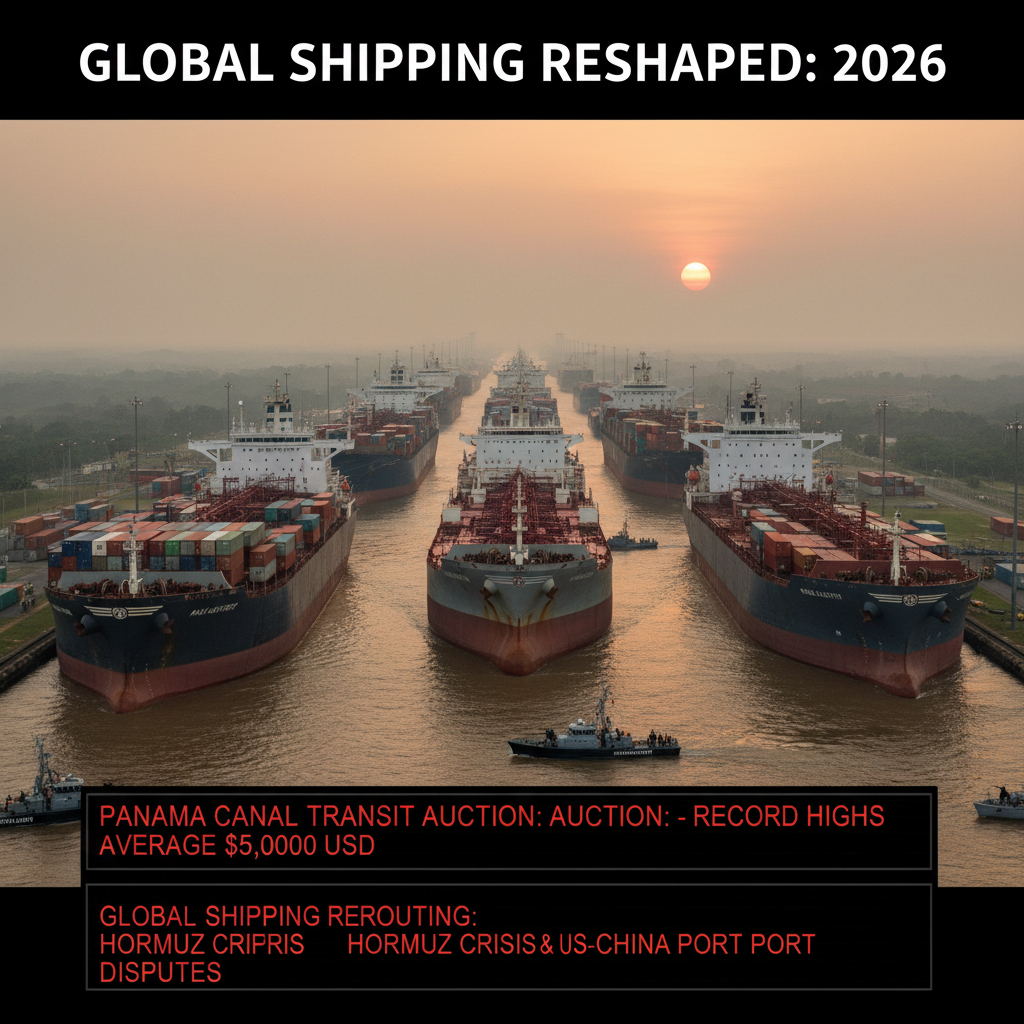
The shipping sector faces severe disruption as Panama Canal maritime geopolitical tensions escalate. With the canal handling 5% of global maritime trade, localized instability sends shockwaves through international logistics. Geopolitical pressures are actively interfering with terminal operations, forcing carriers to rethink supply chains.
The effective closure of the Strait of Hormuz has increased reliance on the Panamanian waterway. Vessels are rerouting to avoid Iranian coastlines, transforming the canal into an emergency escape route. This sudden demand surge has drastically impacted transit costs.
- Auction fees for immediate transit slots have skyrocketed to an unprecedented $4 million.
- Standard transit tolls typically range from $300,000 to $400,000.
- Nearly 20,000 seafarers remain trapped in the Middle East, straining crew logistics and driving alternative routing demand.
Adding to these challenges is the US-China proxy battle over terminal control. In early 2026, Panama voided the port concession of Hong Kong-based CK Hutchison, reflecting US pressure to curb Chinese influence.
- Maersk and MSC were provisionally handed temporary operations of the disputed ports.
- China’s Cosco suspended services at the Balboa port in retaliation.
- CK Hutchison has launched international arbitration against Panama.
Logistics executives must build network redundancy to survive these macroeconomic shocks. Adapting routing strategies is critical for maintaining schedule reliability in 2026.
References
- MITSUI & CO., LTD: mol-service.com
- The Tico Times: ticotimes.net
- Vozpopuli: vozpopuli.com
- Seatrade Maritime: seatrade-maritime.com
- Internazionale: internazionale.it
- CNBC Africa: cnbcafrica.com
- The Japan Times: japantimes.co.jp