

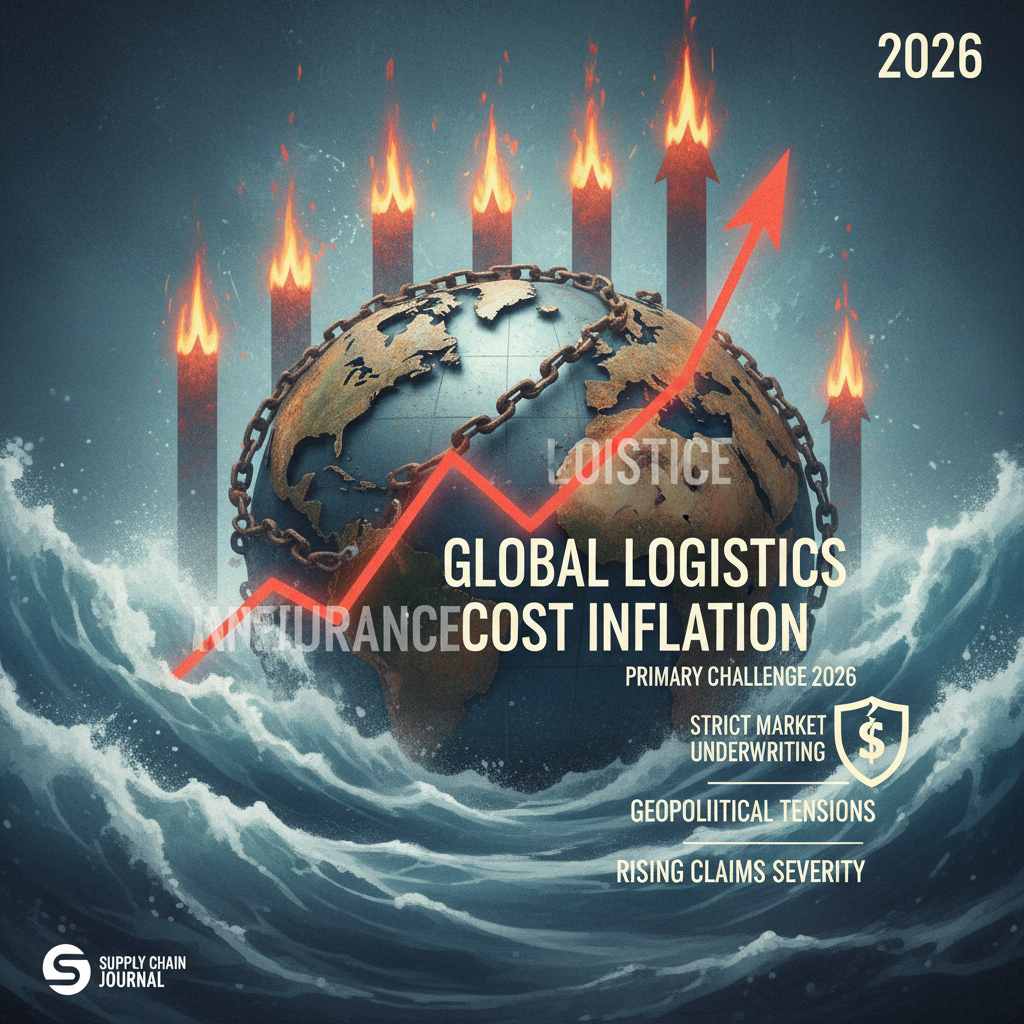
As we progress through 2026, the maritime and supply chain sectors continue to grapple with a complex risk landscape. Global logistics insurance cost inflation remains a critical concern for operators worldwide. Following a period where the global marine insurance premium base climbed to $39.92 billion, risk managers are facing a dynamic environment characterized by fluctuating rates, claims inflation, and strict underwriting discipline.
While some segments of the cargo insurance market are experiencing a slight softening due to new capacity, overall risk costs remain highly volatile. Insurers are offsetting potential rate decreases against the rising tide of claims severity, which is being driven by several converging global factors:
- Geopolitical Instability: Ongoing regional conflicts and trade volatility have disrupted established shipping routes, elevating transit risks and market uncertainty.
- Claims and Material Cost Inflation: Persistent supply chain delays and material cost inflation have significantly driven up the price of physical repairs and cargo replacements, leading to higher claim payouts.
- Workforce Dynamics: Severe labor shortages across the transport sector increase the likelihood of accidents linked to driver fatigue and operational inexperience.
To successfully navigate global logistics insurance cost inflation in 2026, shipping experts must prioritize robust risk management. Insurers are highly focused on prudent risk selection and loss prevention. Providing comprehensive exposure data and demonstrating resilience against emerging vulnerabilities—such as cyber threats and supply chain bottlenecks—are essential for securing competitive coverage terms.
References
IUMI Stats Report 2025, International Union of Marine Insurance. Global maritime, cargo and logistics insurance market trends report – Q4 2025, Marsh. Marine Insurance Market Outlook for 2025, Wylie Crump. Transport and logistics insurance trends in 2025, Marsh Australia. Tariffs and claims inflation, Crawford & Company.