

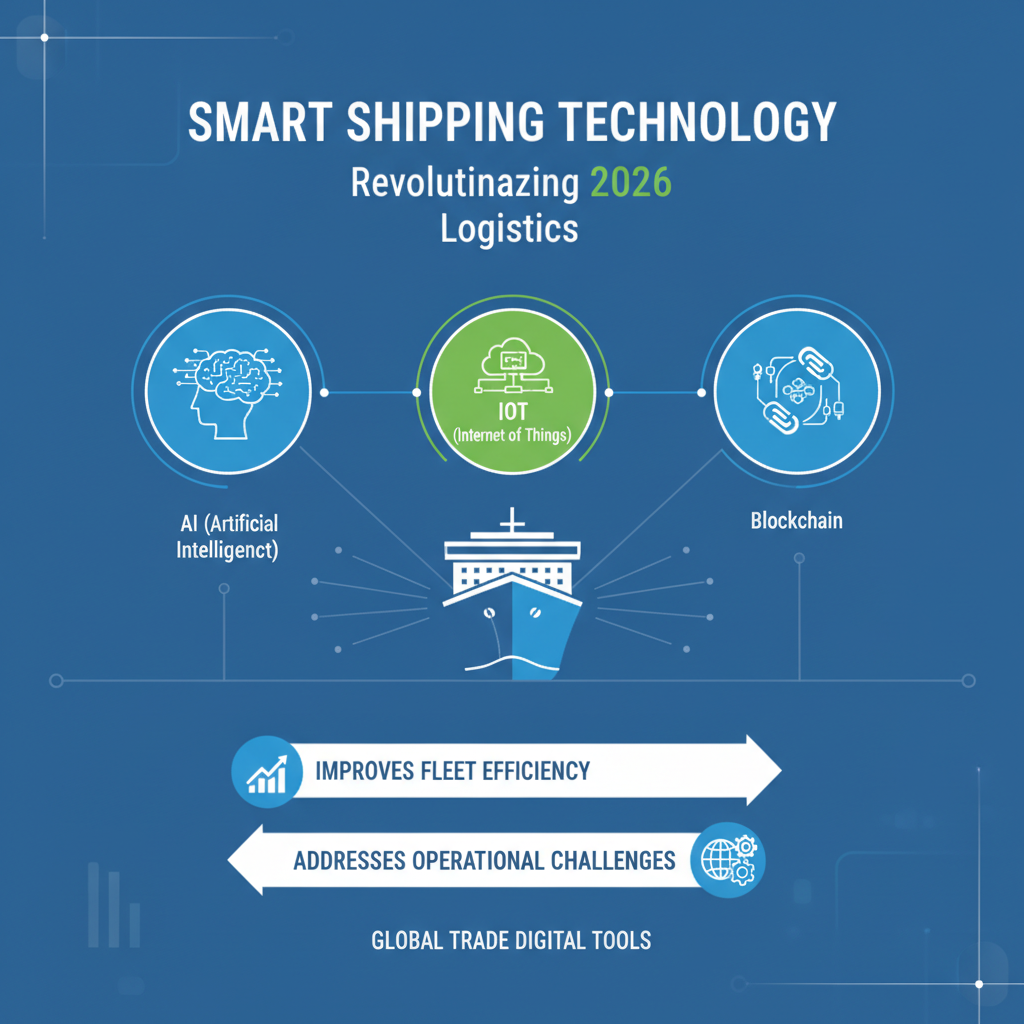
As global trade faces unprecedented volatility, industry leaders are increasingly asking how Smart shipping technology can mitigate supply chain risks. In 2026, digitalization has evolved from basic tracking systems into sophisticated digital twin networks powered by Artificial Intelligence (AI) and the Internet of Things (IoT). Recent data reveals that the market is projected to grow from $26.6 billion in 2026 to $87.2 billion by 2033, demonstrating a robust 19.5% compound annual growth rate.
The maritime sector is experiencing rapid technological integration aimed at enhancing efficiency and reducing carbon emissions. Several breakthrough developments are defining the current landscape:
- Predictive Maintenance and IoT: Smart container systems with IoT-enabled temperature and location monitoring accounted for 22% of maritime logistics innovations in 2025. These systems help operators anticipate part failures weeks in advance.
- AI-Powered Fleet Optimization: Modern algorithms analyze real-time weather and ocean currents to recommend optimal routes, yielding fuel savings of up to 15% for major carriers.
- Blockchain Documentation: Digital Bills of Lading are now utilized by 60% of the world’s major carriers, creating immutable records and ending paper trail bottlenecks.
Smart shipping technology is no longer an optional upgrade; it is an operational necessity for modern fleets. With a projected 20% shortage of global ship officers, automated and autonomous systems provide critical support to overstretched crews. As maritime businesses integrate these intelligent ecosystems, they establish scalable, resilient operations capable of handling the complexities of global trade.
References
- Short Sea Ship – the SMASH! roadmap.
- Shipping and Logistics Market Size, Trends 2035.
- Smart Shipping Market Size Growth – Future Data Stats.
- The Digitalization of the Seas Trends for 2026.
- Maritime Industry High-Tech Challenges.