

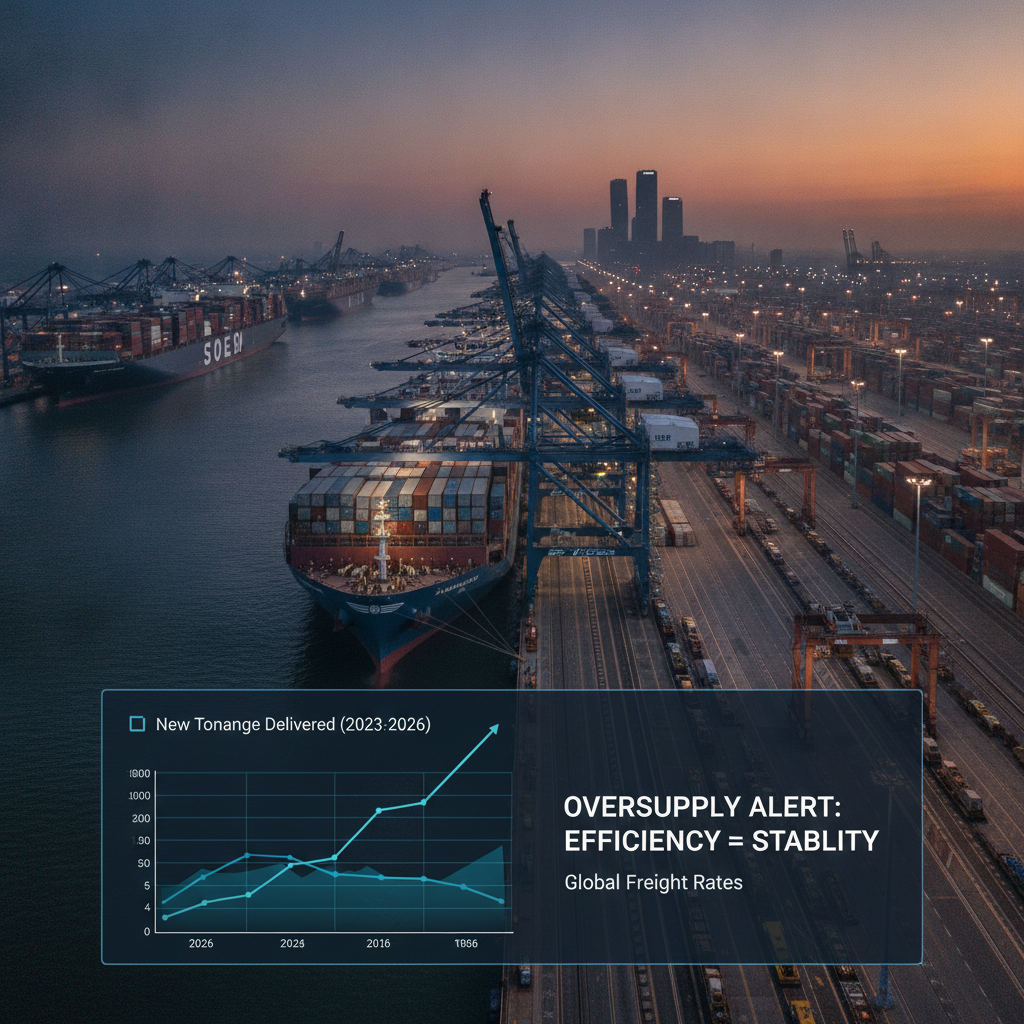
The maritime logistics sector is absorbing a historic influx of tonnage, prompting questions about how Ultra-large container vessel deliveries will reshape global freight networks. By the end of 2025, the ultra-large segment surpassed 8.3 million TEU in total capacity, officially overtaking the 5,100-10,000 TEU class to become the industry’s dominant asset type. As we progress through 2026, shipyards across Asia continue executing a massive procurement pipeline, pushing the overall global orderbook to a record 13 million TEU.
Industry data indicates that the orderbook-to-fleet ratio for the ultra-large segment has exceeded a staggering 70%. While these modern assets—such as the newly commissioned 24,000 TEU LNG dual-fuel ships—offer critical economies of scale and reduced emissions, they introduce complex capacity challenges. Analysts forecast that while fleet capacity may grow by up to 4% in 2026, global container demand is only projected to expand by 1.8% to 3.3%. This structural imbalance locks in an oversupply risk that could persist for years.
The aggressive pace of Ultra-large container vessel deliveries is directly compressing long-term contract rates, which have trended 17% to 25% lower for 2026 compared to 2025. To defend yields and manage this surplus, carriers are implementing essential countermeasures. Key operational adjustments include:
- Accelerating the demolition of older, less fuel-efficient tonnage.
- Executing strategic service consolidations on major East-West trade lanes.
- Implementing slow steaming and tactical blank sailings.
While Ultra-large container vessel deliveries are accelerating the shipping industry’s decarbonization goals, logistics experts must prepare for sustained pressure on freight rates until global trade volumes can adequately absorb this unprecedented megamax capacity.
References
- AXSMarine – Key Container Shipping Data Trends: October 2025
- Riviera Maritime Media – Record-smashing box ship orderbook fuels overcapacity concerns
- CZ app – Global Container Shipping Enters Profit Squeeze After 2025 Decline