

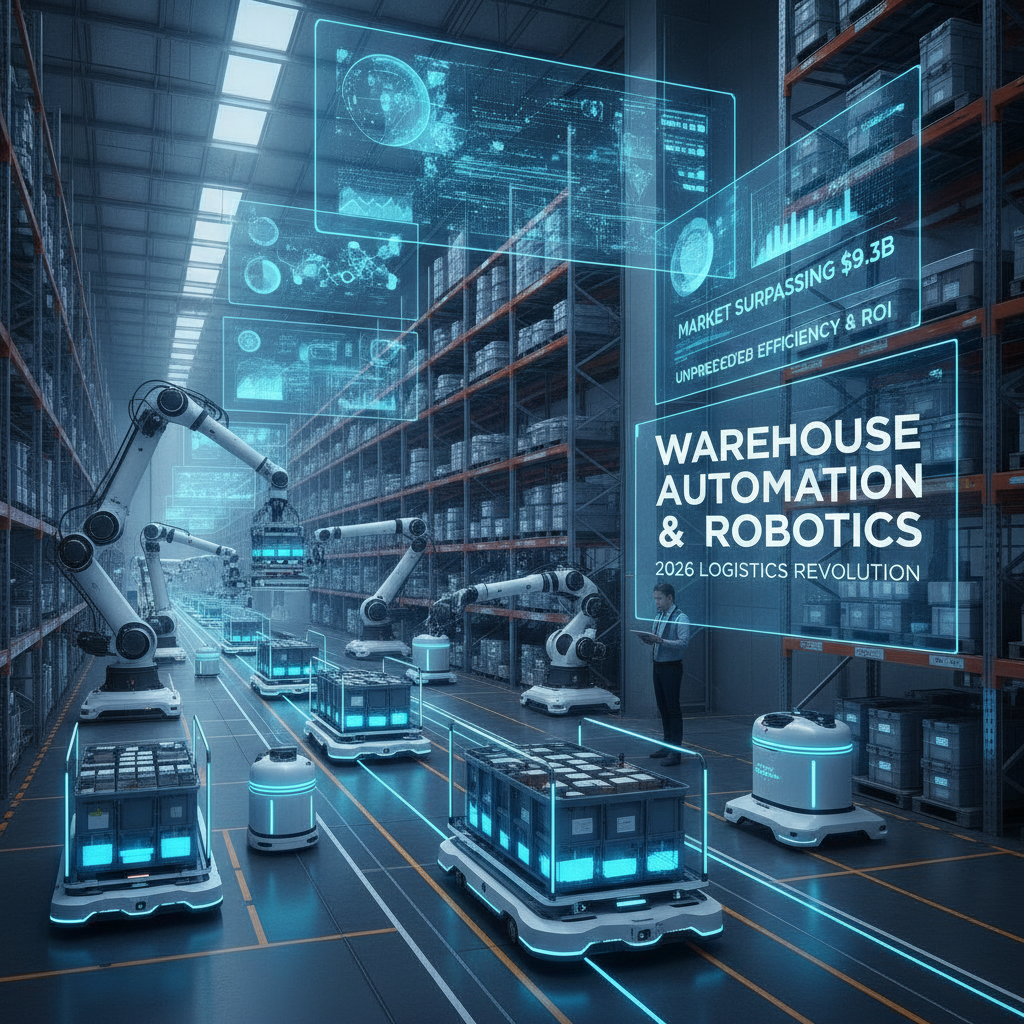
As the logistics sector navigates persistent labor constraints and rising operational costs, Warehouse Automation and Robotics have transitioned from optional upgrades to mandatory competitive differentiators. According to recent market analysis, the global warehouse robotics sector reached $9.33 billion in 2025 and is projected to expand at a 17.7% CAGR, exceeding $21 billion by 2030. This aggressive growth is fundamentally reshaping supply chains in 2026, driven by soaring e-commerce demands and cutting-edge artificial intelligence.
The latest iteration of facility modernization focuses heavily on interoperability and scalability. Leading developments in Warehouse Automation and Robotics include:
- Robotics-as-a-Service (RaaS): Flexible leasing models are removing high capital barriers, allowing mid-market providers to deploy collaborative and humanoid robots as operating expenses rather than heavy capital investments.
- Autonomous Mobile Robots (AMRs): Enhanced by AI-driven spatial intelligence and 4D LiDAR, modern AMRs now navigate highly dynamic environments with near 99% precision.
- Digital Twins: Cloud-native warehouse management systems leverage virtual replicas to seamlessly synchronize massive robot fleets across multiple global facilities.
Facilities heavily integrating Warehouse Automation and Robotics are reporting up to 300% faster order fulfillment speeds and 25-30% reductions in core labor costs. Furthermore, recent industry data indicates that 74% of shippers are willing to switch logistics providers to gain access to superior AI and automation capabilities. As 2026 unfolds, organizations must fully embrace these intelligent systems or risk rapid obsolescence.
References
- Malaysia Warehouse Automation: 2026 Outlook Report, July 2026
- Industry Update: Key Warehouse Automation Developments, January 2026
- 3PL Industry in 2026: 8 Trends From an Operator, January 2026
- Warehouse Automation and Robotics: Revolutionizing Order Fulfillment, June 2026