
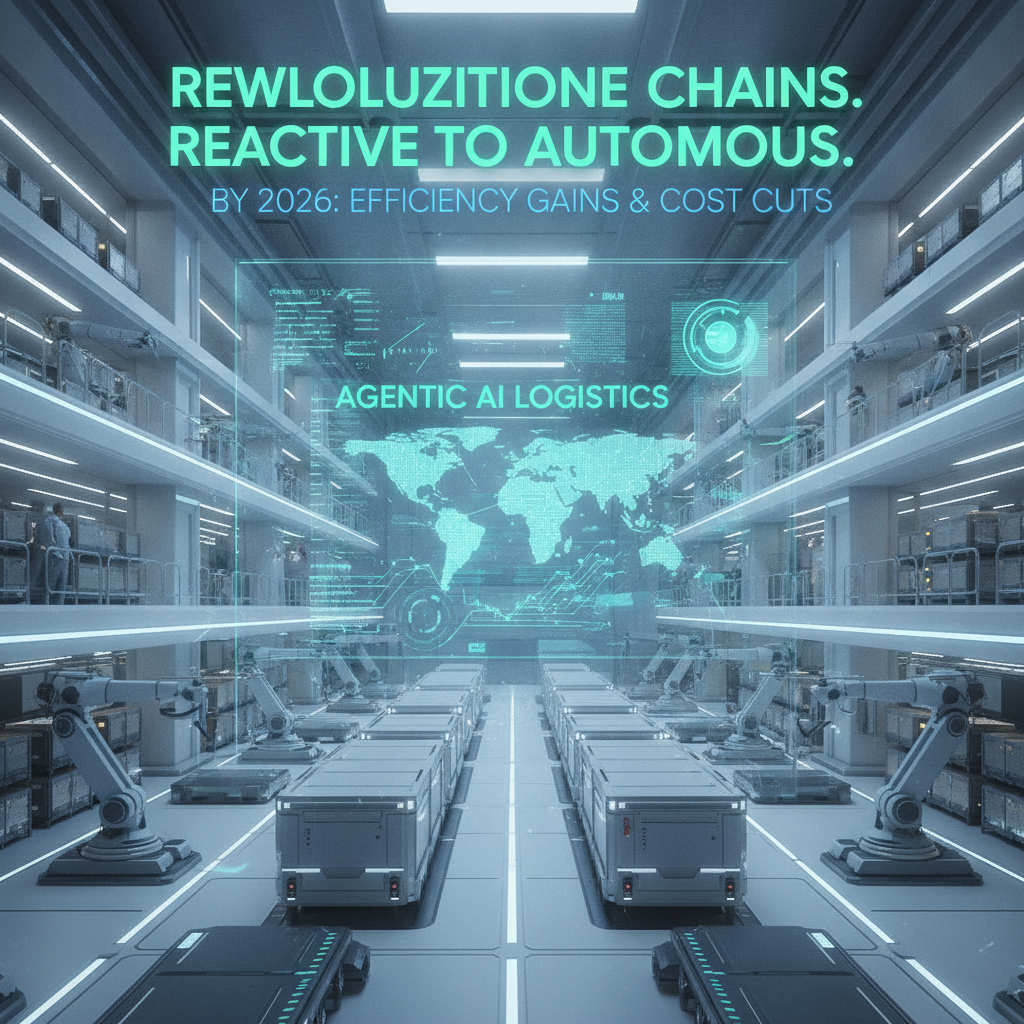
The global supply chain is undergoing a seismic transformation as reactive management gives way to autonomous decision-making. By early 2026, Agentic AI in Logistics has evolved into a strategic imperative for global shipping leaders. Unlike traditional models, agentic systems autonomously sense data, reason across variables, and execute multi-step workflows without supervision.
Recent data underscores the urgency of this technological adoption. The agentic AI market in supply chain and logistics reached an estimated $9.86 billion in 2026. Furthermore, a 2026 Google Cloud report revealed that 74% of shippers are likely to switch third-party logistics providers based on their AI capabilities. Organizations deploying these agents report up to 30% cost reductions and 40% improvements in efficiency.
The integration of agentic models produces measurable value across core functions. Logistics firms leverage these systems for:
- Dynamic Sourcing: Adjusting procurement based on real-time market shifts.
- Autonomous Routing: Optimizing transportation lanes to reduce emissions and transit times.
- Predictive Replanning: Anticipating demand spikes and executing requirement changes instantly.
Industry forecasts indicate that 40% of enterprise apps will natively embed AI agents by the end of 2026. For logistics experts, adopting agentic AI is about building a proactive, hyper-resilient supply chain capable of thriving amidst global volatility.
References
- Mordor Intelligence (2026). Agentic AI In Supply Chain Market Report.
- Google Cloud Blog (2026). How agentic AI rewrites rules for logistics.
- Nevermined (2026). Agentic Commerce Growth Statistics.
- Stellium Inc. (2026). The Autonomous Supply Chain.