
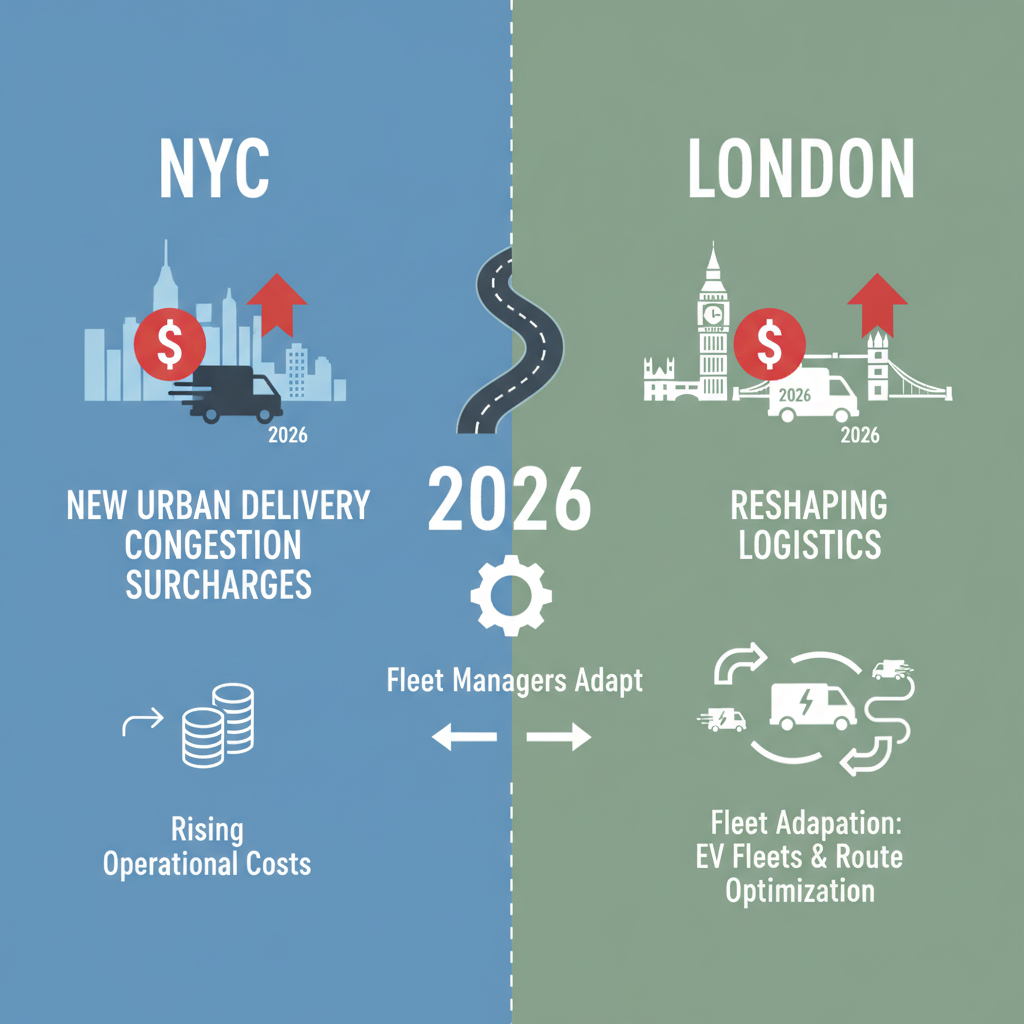
As cities worldwide combat traffic and emissions, Urban Delivery Congestion Surcharges are fundamentally altering the cost structures of global supply chains. With major metropolitan areas enforcing stringent new road tolls in 2025 and 2026, logistics providers face unprecedented operational expenses. These fees aim to reduce gridlock but inevitably force freight carriers to overhaul their last-mile strategies.
Recent policy shifts in global hubs illustrate the tightening financial grip on commercial transport fleets. Key developments include:
- New York City: Implemented on January 5, 2025, the Congestion Relief Zone Toll charges commercial drivers between $3.60 and $21.60 per trip. Unlike passenger cars, trucks can be billed multiple times a day, prompting carriers to pass these costs down to retailers.
- London: Transport for London instituted its largest overhaul in years, raising the daily Congestion Charge from £15 to £18 on January 2, 2026. Blanket exemptions for electric vehicles ended, requiring electric vans and heavy goods vehicles (HGVs) to pay a 50% discounted rate via Auto Pay.
To combat these escalating costs, shipping experts are rapidly deploying new operational models. Fleet managers are heavily relying on route optimization software and consolidating loads to minimize paid zone entries. Furthermore, operators are utilizing off-hours delivery programs and transitioning to smaller cargo vans that qualify for partial exemptions.
As Urban Delivery Congestion Surcharges become a permanent fixture in urban logistics, data-driven adaptation is essential. Companies that fail to update their telematics and route planning will struggle to remain competitive in an increasingly regulated landscape.
References:
- Mothership (2025). New York City’s Congestion Pricing May Lead to Higher Retail Prices.
- Splend (2025). London Congestion Charge Updates 2025-2026.
- FleetPoint (2025). London’s Congestion Charge is changing in 2026.