
AI Hardware Overtakes E-Commerce
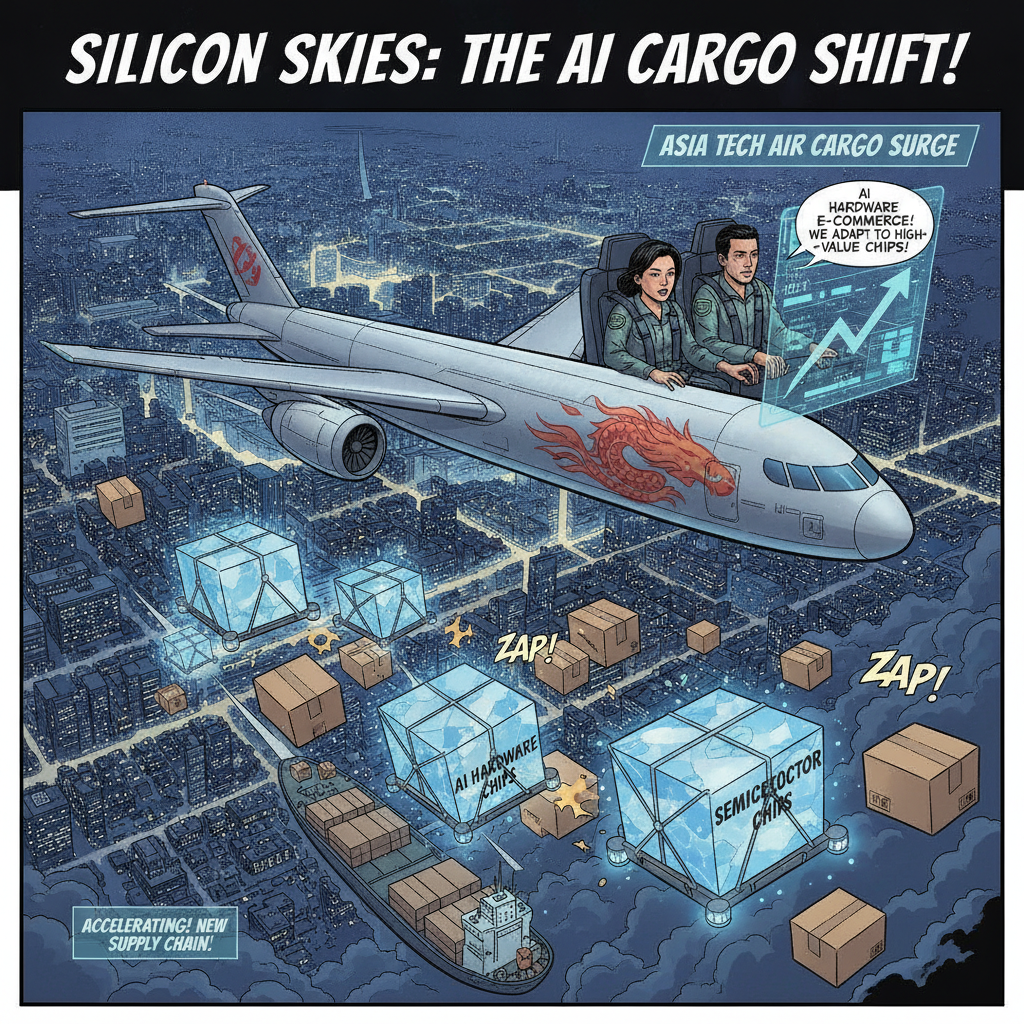
The global race to build artificial intelligence infrastructure is fundamentally redrawing Asia’s logistics map, driving the Asian Technology Air Cargo Surge. Unlike the pandemic-era parcel boom, today’s demand is underpinned by multi-year orders for advanced memory chips, processors, and server racks. With tighter western import rules, high-tech cargo has dethroned cross-border e-commerce as the primary growth engine.
Airlines Reap Substantial Profits
Major carriers are aggressively redesigning their global networks around semiconductor manufacturing hubs to capture this highly lucrative, technology-driven freight. The financial impact is clearly visible across the logistics sector. Korean Air Lines reported a 46% second-quarter cargo revenue surge, attributed directly to AI data center shipments. Lufthansa Cargo also posted a 26% operating profit gain in mid-2026, bolstered by Asian cloud hardware exports.
Key Drivers of the 2026 Logistics Shift
- Semiconductor Mega-Orders: Visibility for advanced high-bandwidth memory shipments stretches two to three years into the future.
- Regulatory Headwinds: Tighter international trade rules are dampening low-value consumer shipments, elevating the dominance of high-value tech freight.
- Regional Shifts: South-east Asia is capturing massive manufacturing investments, driving a 21.5% surge in Asian air exports to the US last year.
For supply chain professionals and freight forwarders, the pivot toward high-density computing infrastructure requires specialized handling and tighter security protocols. As the AI sector continues to attract billions in investments, the Asian technology air cargo ecosystem is poised for sustained, high-yield expansion.