

The 2026 Reality of East Asian Semiconductor Freight Logistics
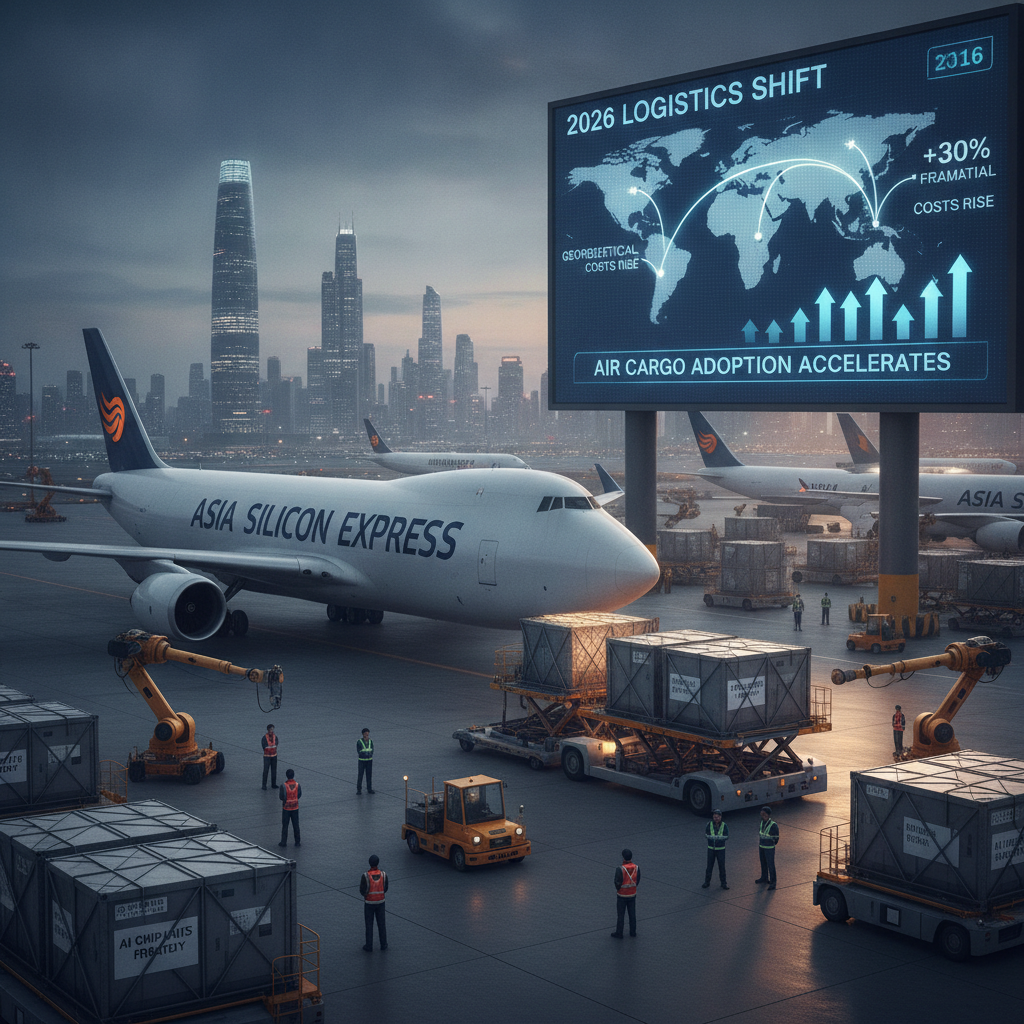
As global semiconductor demand races toward a projected $820 billion in 2026, the industry bottleneck has officially shifted from production capacity to delivery efficiency. APAC remains the engine of this growth, but East Asian Semiconductor Freight Logistics is undergoing a radical transformation. With over 66% of semiconductor exports now reliant on air freight, logistics providers face unprecedented pressure to deliver zero-fail, temperature-controlled transit for high-value AI and EV chips.
Geopolitics and East Asian Semiconductor Freight Logistics Costs
The global semiconductor logistics market is forecast to jump from $79.32 billion in 2025 to $86.55 billion in 2026. This growth is heavily influenced by regional tensions and supply chain rerouting. Maritime risks and geopolitical friction have driven East Asian Semiconductor Freight Logistics costs up by 15% to 22% this year alone. To mitigate these delays, tech giants are supplementing traditional long-haul routes with regional circuits across Southeast Asian hubs like Malaysia and Vietnam.
Key 2026 Logistics Trends to Watch
- Air Freight Dominance: High-value AI chips demand rapid transit, forcing a pivot from sea to air cargo despite premium costs.
- Precision Handling: Over 61% of manufacturers now mandate strict temperature-controlled and vibration-sensitive transport.
- ASEAN Expansion: Surging packaging outsourcing to Southeast Asia is creating new point-to-point logistics lanes to bypass traditional chokepoints.
Ultimately, securing the supply chain requires unprecedented agility. For shipping experts, mastering these high-stakes networks is no longer just an operational goal—it is a strategic imperative.