
Navigating the Strait of Hormuz Maritime Rerouting Crisis
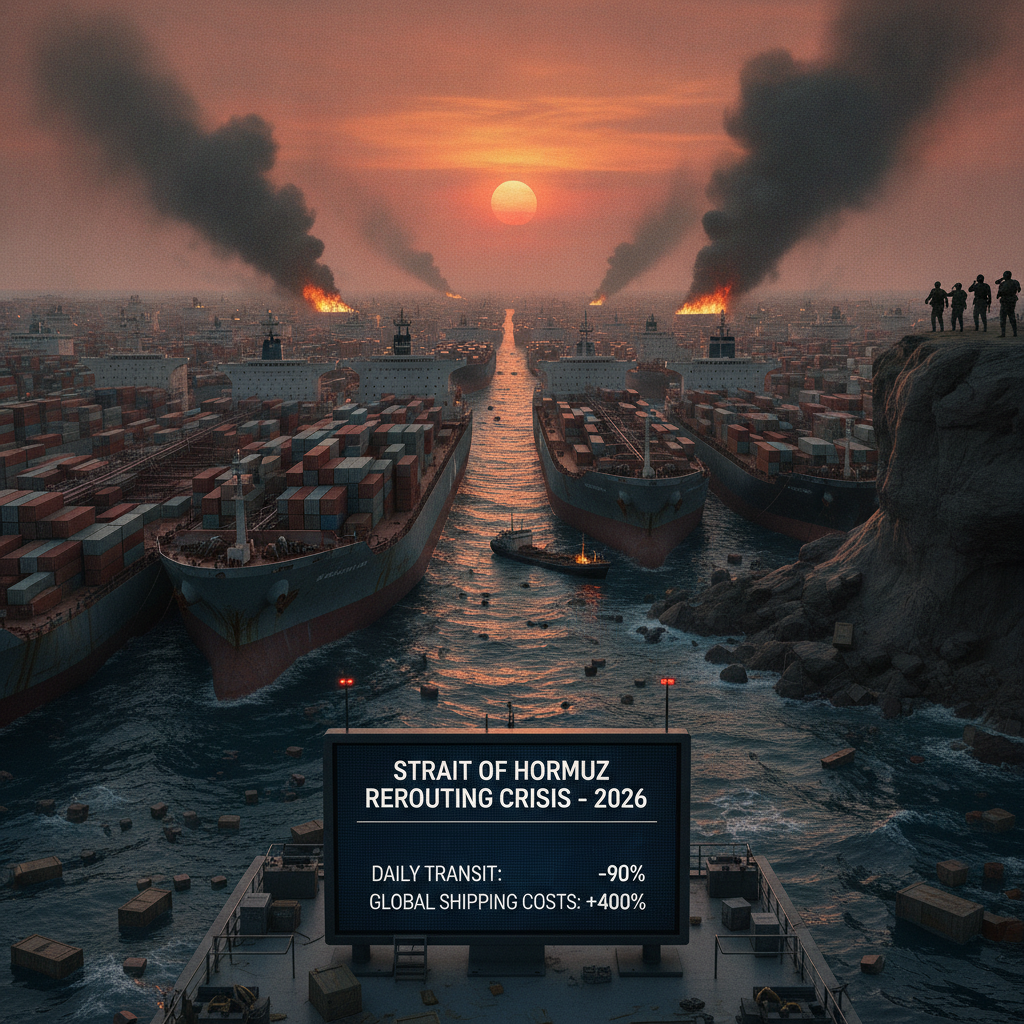
The global shipping industry is facing an unprecedented logistical bottleneck as the 2026 crisis drastically alters trade flows. Following the military escalation in February 2026, the Strait of Hormuz maritime rerouting has become a daily reality for tanker operators and supply chain managers worldwide. Historically facilitating roughly 25% of global seaborne oil trade, the strait’s near-total closure has triggered sweeping strategic shifts across the logistics sector.
Impact on Transit Volumes and Trade Data
Recent analytics highlight the severity of the disruption across the supply chain. Critical shifts include:
- Pre-conflict transit averages of over 100 daily vessels plummeted to a mere 8 to 10 crossings by August 2026.
- Combined export volumes of critical commodities from Hormuz-dependent economies dropped by 54% year-over-year in April 2026.
- Liquified natural gas (LNG) exports suffered a staggering 95% contraction.
These bottlenecks force shipping companies to absorb extreme war-risk insurance premiums or seek massive detours.
Future Logistics and Alternative Routes
While an Iran-Oman framework to cautiously reopen shipping lanes is reportedly nearing finalization, the Strait of Hormuz maritime rerouting will likely have lasting impacts. Shippers are heavily relying on contingency plans, including Cape of Good Hope diversions and complex transshipment hubs in Oman and the United Arab Emirates. For maritime logistics experts, building systemic resilience against such chokepoint vulnerabilities remains the highest priority for the remainder of 2026.