

Understanding Global Last-Mile Delivery Cost Inflation
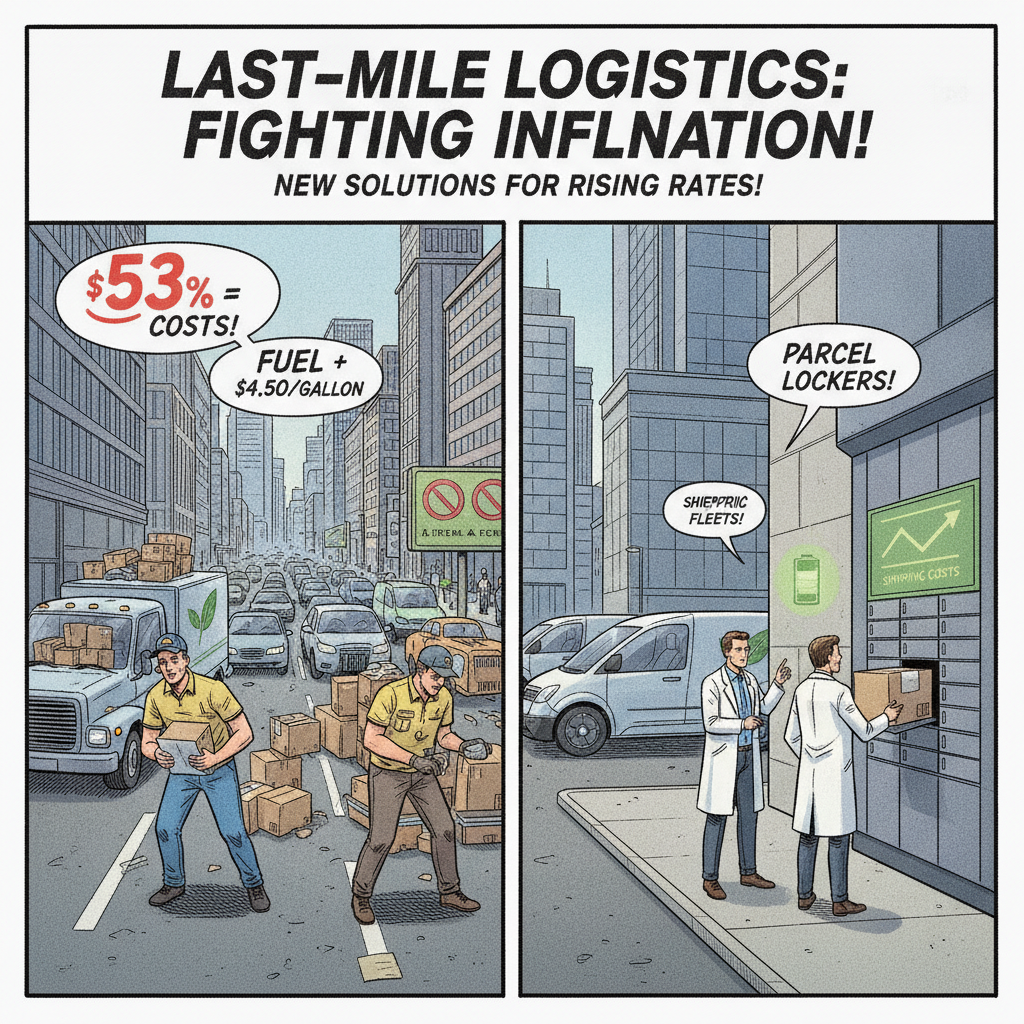
Last-mile fulfillment is currently the most expensive and complex segment of the modern supply chain. With Global Last-Mile Delivery Cost Inflation surging, logistics experts are facing unprecedented challenges in maintaining retail profitability. Recent tracking data reveals that last-mile operations now account for a staggering 53% of total shipping costs, climbing sharply from 41% in 2018.
Core Drivers Amplifying Global Last-Mile Delivery Cost Inflation
The current surge in delivery expenses is fueled by structural routing inefficiencies, volatile energy markets, and severe labor shortages. In the United States, baseline delivery costs increased by an average of 12% between 2024 and 2025. Furthermore, basic commercial trucking operations reached a record high operating cost of $2.336 per mile in 2025, cementing economic volatility as a permanent industry condition.
- Labor constraints currently represent roughly 50% of all localized logistics expenses.
- Carrier surcharges for residential and fuel factors inflate standard invoice rates by 30-40%.
- Failed or missed deliveries cost retailers an average of $17.20 per occurrence.
Strategic Tactics to Combat Global Last-Mile Delivery Cost Inflation
Logistics analysts emphasize that relying on traditional delivery models is no longer financially viable. According to the 2026 State of Logistics Report, supply chain disruptions are enduring features that require comprehensive structural reengineering rather than temporary budget fixes. To aggressively mitigate the impacts of Global Last-Mile Delivery Cost Inflation, leading 3PL providers are prioritizing three core initiatives:
- Investing heavily in AI-driven route density optimization platforms.
- Transitioning to commercial electric vehicle fleets to stabilize volatile energy costs.
- Deploying smart parcel locker networks to facilitate urban delivery consolidation.
Implementing automated locker systems has proven particularly effective for logistics operations. Automated consolidation can reduce driver stop times drastically and achieve up to 55% cost reductions in direct transportation expenses.