

Why Connected Device Logistics Management is Crucial
The global shipping industry is undergoing a digital transformation, and Connected Device Logistics Management is at the forefront of this revolution. Valued at over $950 million in 2025, the IoT device management market for transportation and logistics is projected to grow at a 22.7% CAGR through 2033. This unprecedented growth highlights how modern enterprises are transitioning from legacy tracking systems to real-time, sensor-driven supply chain ecosystems.
How Connected Device Logistics Management Reduces Costs
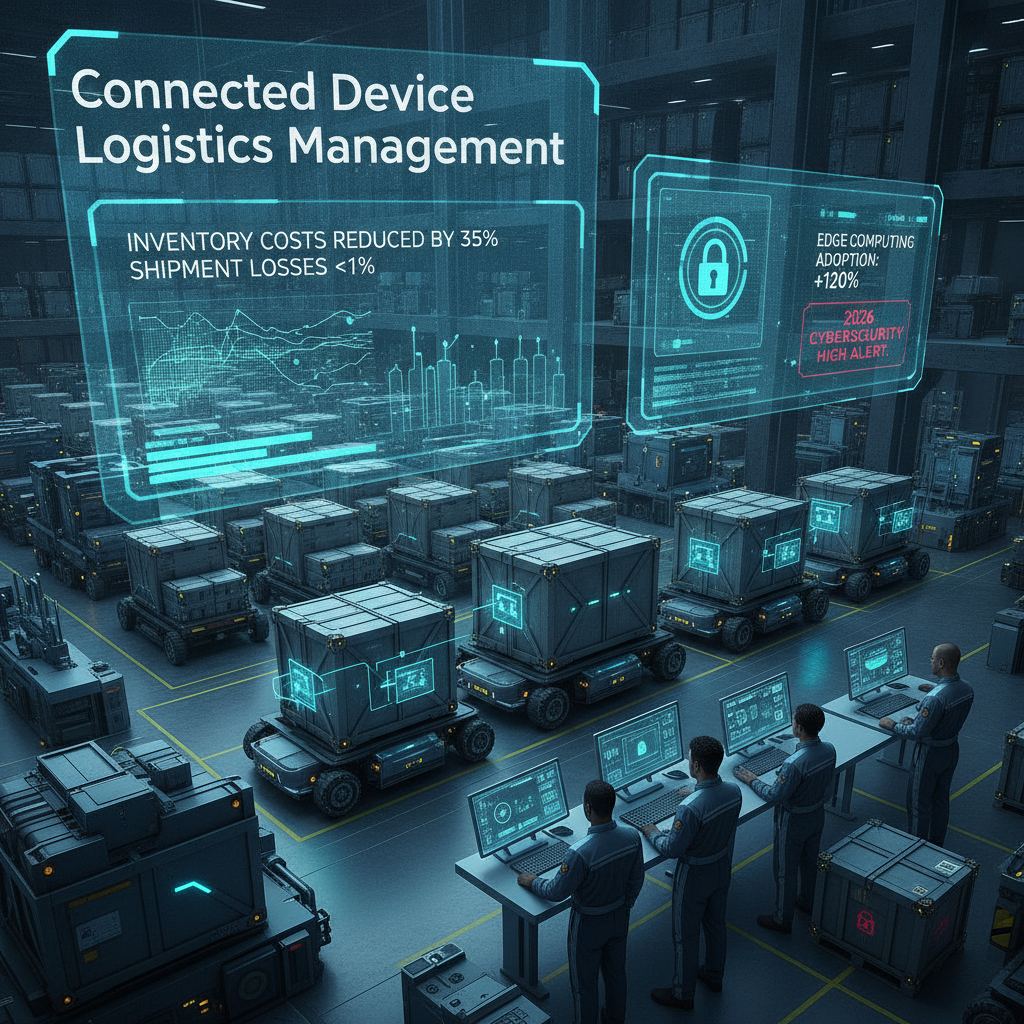
Integrating smart devices into freight and warehousing infrastructure delivers measurable ROI. Recent 2026 data indicates that IoT-enabled networks reduce overall inventory costs by 20% to 30% while decreasing lost shipments by 23%. Organizations leveraging this technology benefit from:
- Real-time asset tracking and route optimization
- Predictive maintenance for fleet and warehouse robotics
- Automated environmental monitoring for cold-chain assurance
Challenges in Connected Device Logistics Management
Despite the operational advantages, scaling these solutions presents technical hurdles. By 2025, approximately 75% of enterprise-generated data within supply chains was processed at the edge, reducing latency but expanding the attack surface. Consequently, 68% of supply chain leaders cite cybersecurity as the primary barrier to broader IoT adoption. Moving forward, robust security frameworks will be critical to realizing the $1.9 trillion productivity boost projected for IoT-driven logistics by 2030.