

Grade A Logistics Real Estate: Moving Beyond Oversupply
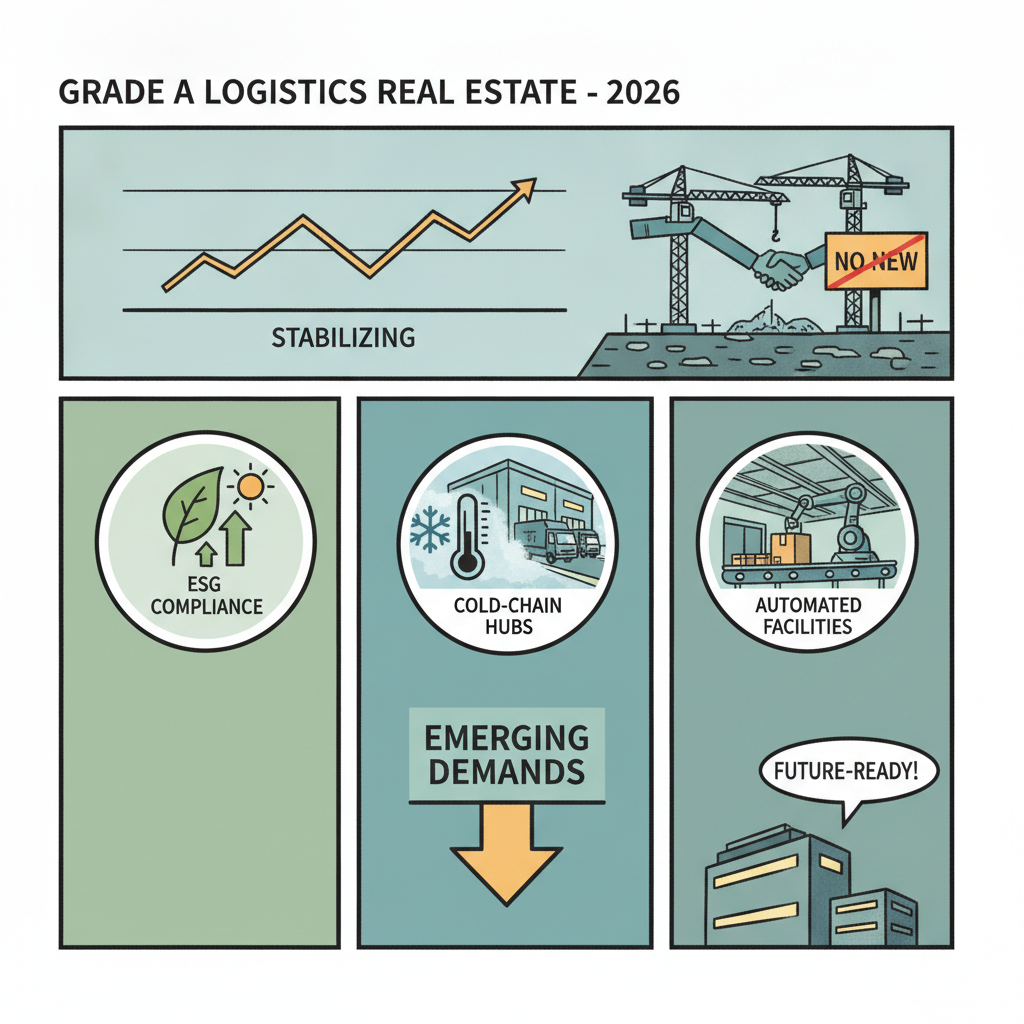
The global landscape for Grade A Logistics Real Estate is entering a transformative phase in 2026. Following the volatile supply surges of the post-pandemic era, industry experts are witnessing a critical rebalancing act. According to a recent 2026 CBRE Korea market forecast, new supply pipelines are shrinking dramatically, with 2026-2027 deliveries expected to account for less than 5% of current market sizes in major hubs like Greater Seoul. This structural contraction is effectively resolving past oversupply issues and stabilizing vacancy rates, shifting the sector into a phase of qualitative growth.
Emerging Demand Drivers and Structural Shifts
While speculative development has cooled, occupier demand for specialized Grade A Logistics Real Estate remains remarkably resilient. Tenant strategies are heavily pivoting toward operational efficiency, green energy, and technology integration. Key 2025-2026 trends include:
- Advanced Manufacturing & E-Commerce: Growth in new energy sectors, precision instruments, and cross-border e-commerce continues to underpin robust leasing demand, particularly in Asian markets.
- Cold-Chain Expansion: Temperature-controlled facilities are seeing massive capital injections. In Saudi Arabia, strategic developments like LogiPoint’s new Jeddah facility initiated in mid-2026 highlight the shift toward high-end, climate-controlled hubs.
- ESG and Automation: Savills’ 2026 industry reports note that modern tenants demand LEED-certified, highly automated floorspaces to accommodate Automated Guided Vehicles (AGVs) and sustainable supply chains.
Global Rental Yields and Strategic Outlook
Despite macroeconomic headwinds, rental yields for premium logistics assets are maintaining a stable trajectory. European markets anticipate moderate rental growth averaging 1.9% annually, supported by strong investor confidence and low vacancy in core zones. In high-growth regions like Riyadh, massive 16% rental growth was reported for built-to-suit Grade A logistics parks, rewarding developers who secured long-term, tenant-funded leases. For logistics and shipping professionals navigating 2026, the mandate is clear: success in Grade A Logistics Real Estate will rely less on sheer square footage and more on data-driven, ESG-compliant, and automated facility management.