

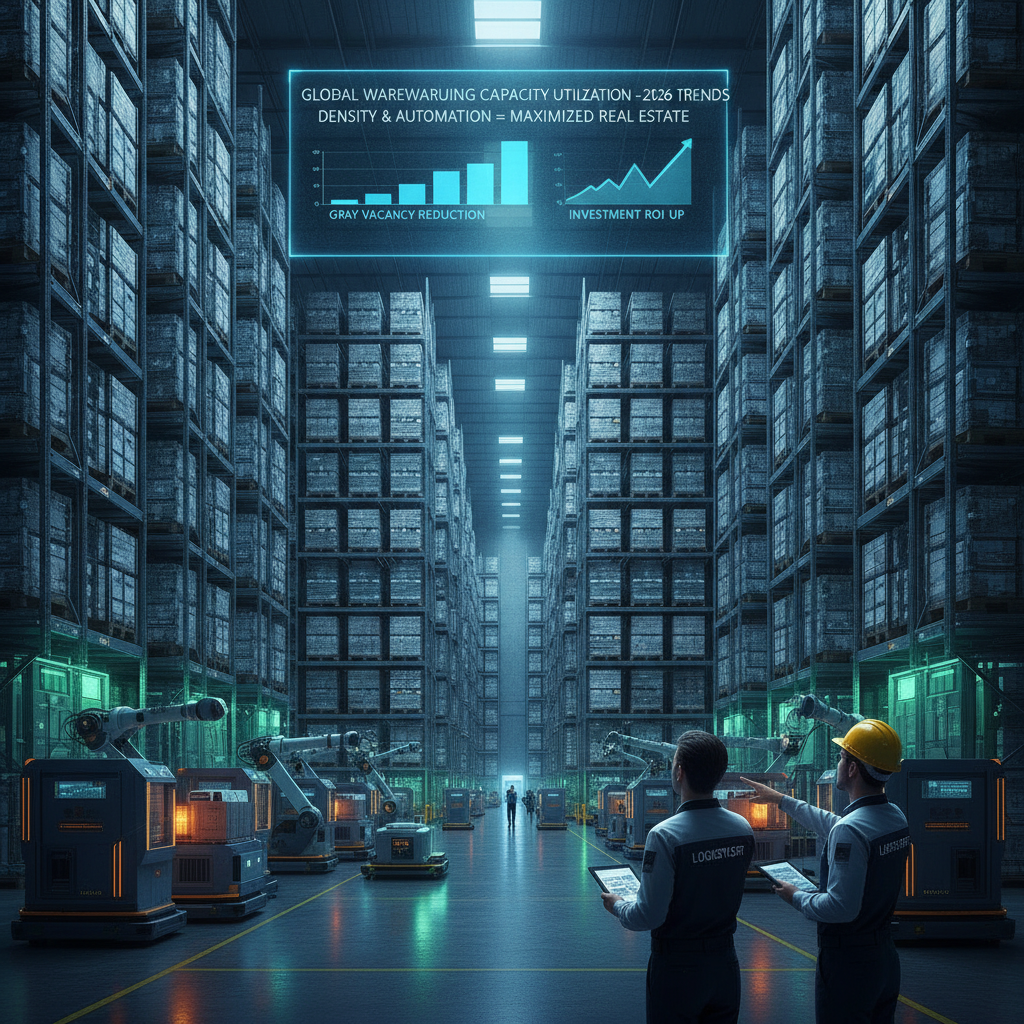
In 2026, the supply chain landscape is undergoing a critical transformation as experts monitor Global Warehousing Capacity Utilization rates. Following aggressive destocking in late 2025, the industry is witnessing a steady rebound toward 60% as restocking initiatives take hold. Logistics leaders are now redefining strategies to maximize existing square footage despite national vacancy rates sitting around 6.8%.
The Hidden Challenge of Global Warehousing Capacity Utilization
While official vacancy rates remain a focal point, the real threat to profitability is gray vacancy, a scenario where fully leased warehouses contain empty pallet spaces. True space optimization requires targeted consolidation to eliminate these operational inefficiencies. Consequently, industry giants are actively driving their Global Warehousing Capacity Utilization rates toward the optimal 85% to 90% benchmark.
Strategies to Optimize Global Warehousing Capacity Utilization
Leading supply chain operators are abandoning sheer footprint expansion in favor of density-driven logistics. Maximizing current infrastructure requires targeted technological integrations and smart real estate plays.
- Warehouse Automation: Robotics and automated storage systems extract maximum capacity from existing footprints without requiring expensive new leases.
- Facility Consolidation: Major brands are closing redundant facilities and insourcing distribution to push capacity utilization past the 80% threshold.
- Strategic Subletting: Monetizing underutilized gray space in premium logistics markets helps logistics firms offset soaring real estate costs.
Density Over Distance: Future Market Outlook
As the global warehousing market valuation climbs toward $1.6 trillion in 2026, operators face intense pressure to balance operational expenses. The new supply chain logic emphasizes density over distance, dictating that facilities must process higher volumes in tighter spaces. Ultimately, mastering optimal capacity utilization will dictate logistics profitability in the coming years.