

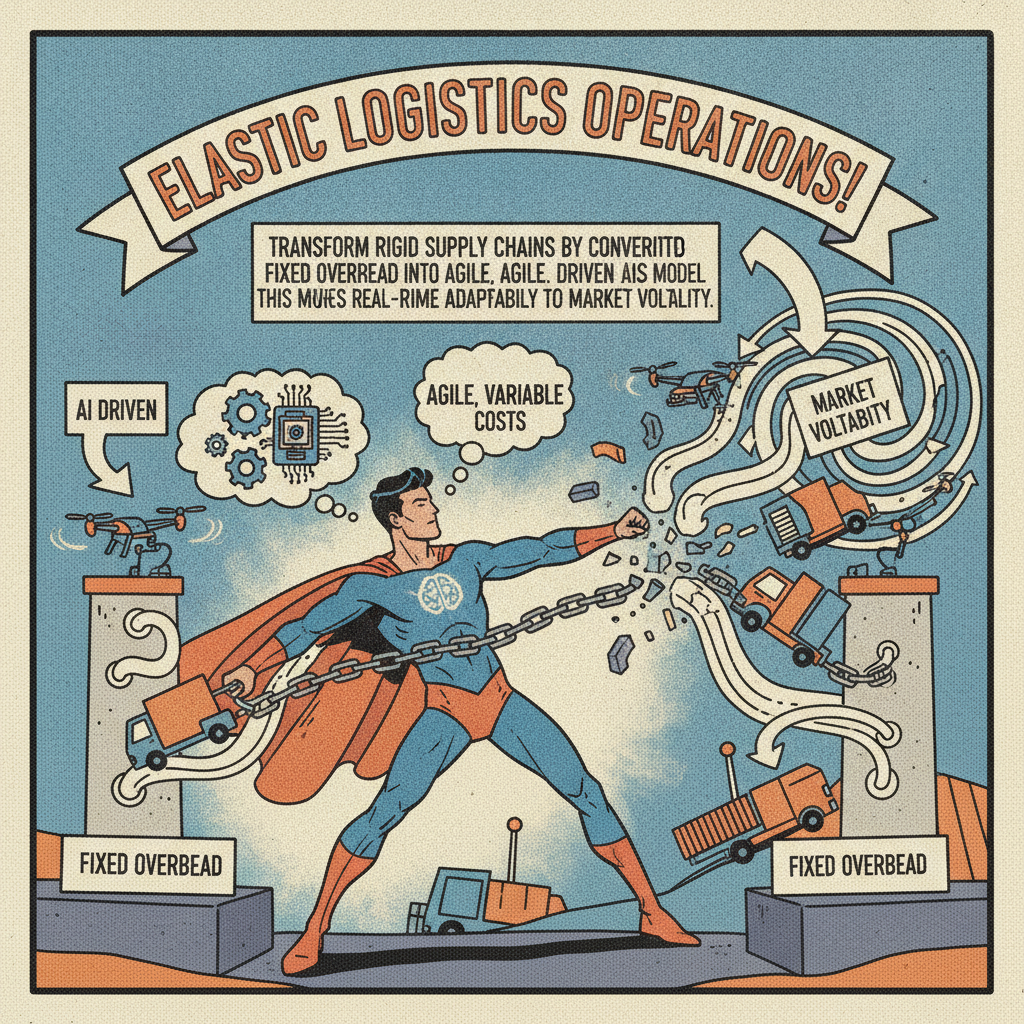
The Shift to Elastic Logistics Operations
In a global market defined by rapid demand fluctuations, rigid supply chains have become a significant liability. For logistics and shipping experts, the mandate for 2026 is clear: transition to Elastic Logistics Operations. This highly agile operating model allows businesses to expand or shrink capabilities instantly based on real-time market demands, converting fixed overhead into variable, pay-as-you-go costs. With the e-commerce logistics market projected to reach $923 billion by 2028, relying on static infrastructure is no longer viable.
Scaling Through Flexible Infrastructure
The core model rests on a foundation of digital orchestration, flexible physical infrastructure, and dynamic routing. At the forefront is the transition to on-demand warehousing and Warehousing-as-a-Service, a market forecast to grow at nearly 20% annually through 2030. This variable capacity allows operators to scale storage space up during peak seasons and release it during off-peak periods, eliminating the financial drain of empty shelves.
AI-Powered Predictive Planning
Furthermore, Elastic Logistics Operations are heavily dependent on advanced technology layers. The AI in logistics sector is expected to grow at a staggering CAGR of 42% from 2025 to 2032. By leveraging machine learning for demand forecasting and predictive maintenance, operators can reduce unplanned downtime by up to 50%. Instead of reacting to disruptions, systems now flag early indicators of demand surges or regional delays, allowing for seamless resource reallocation.
Building True Resilience
Ultimately, Elastic Logistics Operations protect the bottom line. The global elastic logistics segment is projected to maintain a CAGR of 9.4% through 2032. By utilizing shared carrier networks, flexible freight capacity, and real-time visibility tools, supply chain leaders can adapt to geopolitical disruptions or volatile consumer behavior instantly. As we navigate 2026, elasticity is not just an operational upgrade; it is the ultimate competitive advantage for modern supply chain survival.
References: MBE Franchise (2026), Supply Chain Consulting Group (2026), Transport and Logistics News (2025).