
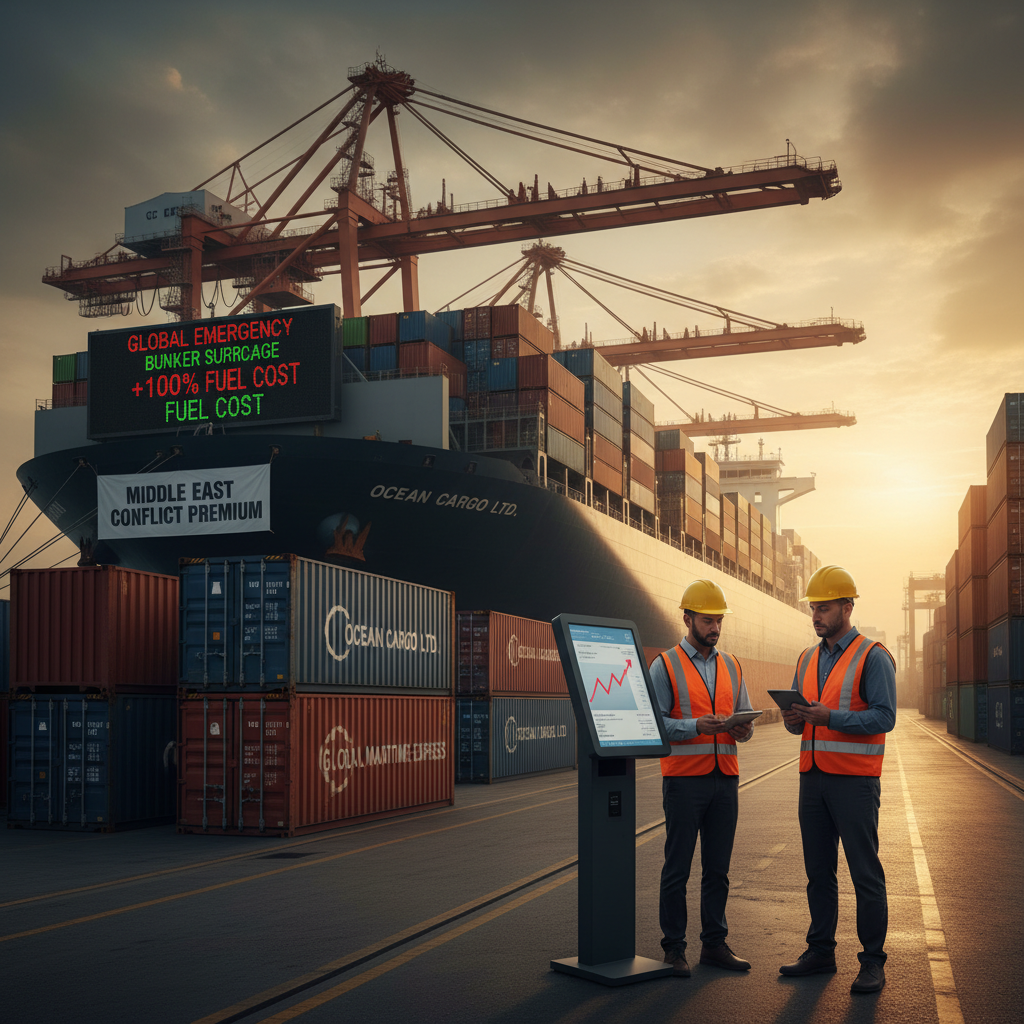
In the first quarter of 2026, the logistics sector faced unprecedented disruption as major shipping lines uniformly introduced Global emergency bunker surcharges. Triggered by intense geopolitical conflicts effectively closing the Strait of Hormuz to Western commercial shipping, carriers were forced to reroute vessels around the Cape of Good Hope [1]. This detour added 3,500 to 4,000 nautical miles per voyage, drastically increasing bunker fuel consumption and operational costs [1].
The immediate catalyst for these emergency fuel surcharges was a staggering surge in marine fuel prices. By mid-March 2026, Very Low Sulfur Fuel Oil (VLSFO) prices more than doubled, climbing to $1,039 per metric ton in Fujairah and $986 in Singapore [1]. In response, industry giants implemented immediate cost pass-throughs:
- Hapag-Lloyd: Surcharges up to $160 per TEU for long-haul dry cargo.
- Maersk: Global surcharges effective late March, varying by fuel availability.
- OOCL: Emergency levies reaching $975 per container for 40-foot reefers to Africa.
For logistics professionals, navigating these unpredictable Global emergency bunker surcharges has become a central challenge of 2026. The financial strain on supply chains is compounded by skyrocketing war-risk insurance premiums, which jumped 300 percent to $1 million per voyage for vessels entering high-risk Gulf regions [1]. To survive these compounded freight shocks, shippers must aggressively adapt by recalibrating transportation budgets, improving demand forecasting, and exploring alternative regional relay hubs.
References
- [1] D&D Worldwide Logistics, Bertling Group, and Straits Times 2026 Ocean Freight Market Reports.