

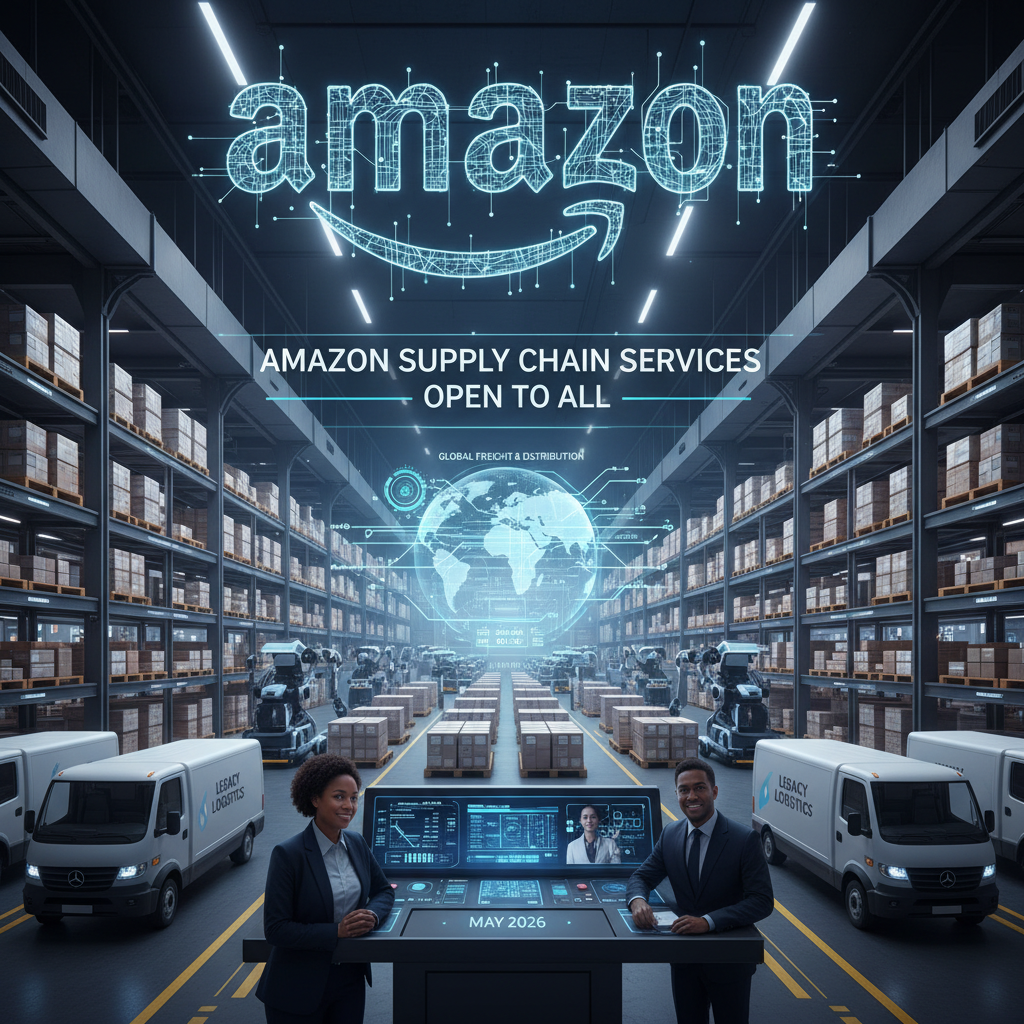
On May 4, 2026, the logistics sector witnessed a seismic shift with the official Amazon Supply Chain Services expansion. Transitioning from a seller-exclusive tool to a commercialized platform, Amazon has opened its vast end-to-end freight, distribution, and parcel shipping capabilities to all businesses. By uncoupling these tools from its retail marketplace, the giant is positioning itself as a direct competitor to traditional third-party logistics (3PL) providers and parcel carriers.
Prominent global brands, including Procter & Gamble, 3M, and American Eagle Outfitters, have signed on as early adopters to leverage Amazon’s robust network. Peter Larsen, vice president of Amazon Supply Chain Services, likened this commercialization strategy to the rollout of Amazon Web Services (AWS), bringing decades of proven AI-driven inventory intelligence to the broader market. Market reactions were immediate, with competitor stocks taking a significant hit.
Logistics experts and competitors must closely monitor the following data points surrounding this rollout:
- Cost Efficiency: Amazon claims its fully managed options yield transportation costs up to 25% lower than leading alternatives.
- Sales Growth: Sellers utilizing the managed options report an average 20% increase in sales conversion rates.
- Market Dominance: In 2024, Amazon handled over 6 billion parcels, trailing only the U.S. Postal Service in domestic volume.
- Competitor Impact: Following the May 2026 announcement, shares of FedEx dropped 9.1%, while UPS stock fell over 10%.
As the Amazon Supply Chain Services expansion takes root, legacy freight forwarders and 3PLs must quickly adapt. Amazon is officially a one-stop global logistics powerhouse.
References
- Modern Distribution Management (MDM)
- MLQ.ai
- FreightWaves
- TheStreet Pro
- GV Wire