
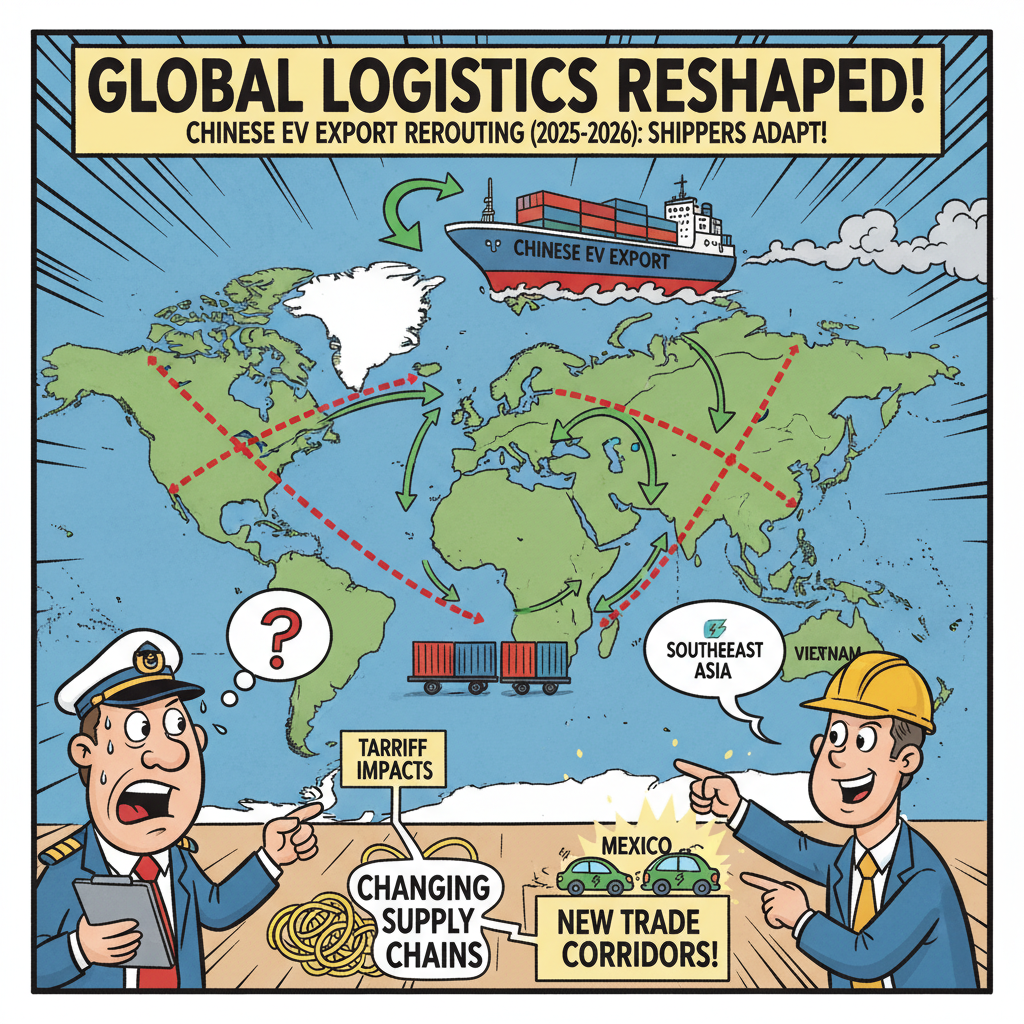
The global automotive logistics landscape is undergoing a massive transformation as Chinese EV Export Rerouting accelerates in 2025 and 2026. Facing new October 2024 EU tariffs that reach up to 35.3%, original equipment manufacturers like BYD and SAIC are actively shifting their shipping lanes and supply chain strategies to maintain cost advantages.
To bypass Western trade barriers, logistics providers are mapping out fresh trade corridors. Key developments in recent months include:
- Middle East Expansion: Following rising regional energy demands in 2026, the Middle East is now absorbing significant Chinese EV capacities, diversifying global maritime routing.
For shipping and logistics experts, this geographical pivot requires robust adaptation. Manufacturers are mitigating bottlenecks by frontloading exports or shipping components rather than finished vehicles, since battery packs face significantly lower tariffs compared to complete units. Simultaneously, digital platforms are being integrated to automate 2025 HS code compliance and streamline complex cross-border documentation. As the European Commission negotiates minimum import price mechanisms for 2026, agility in capacity planning will define logistics success in this new era.