
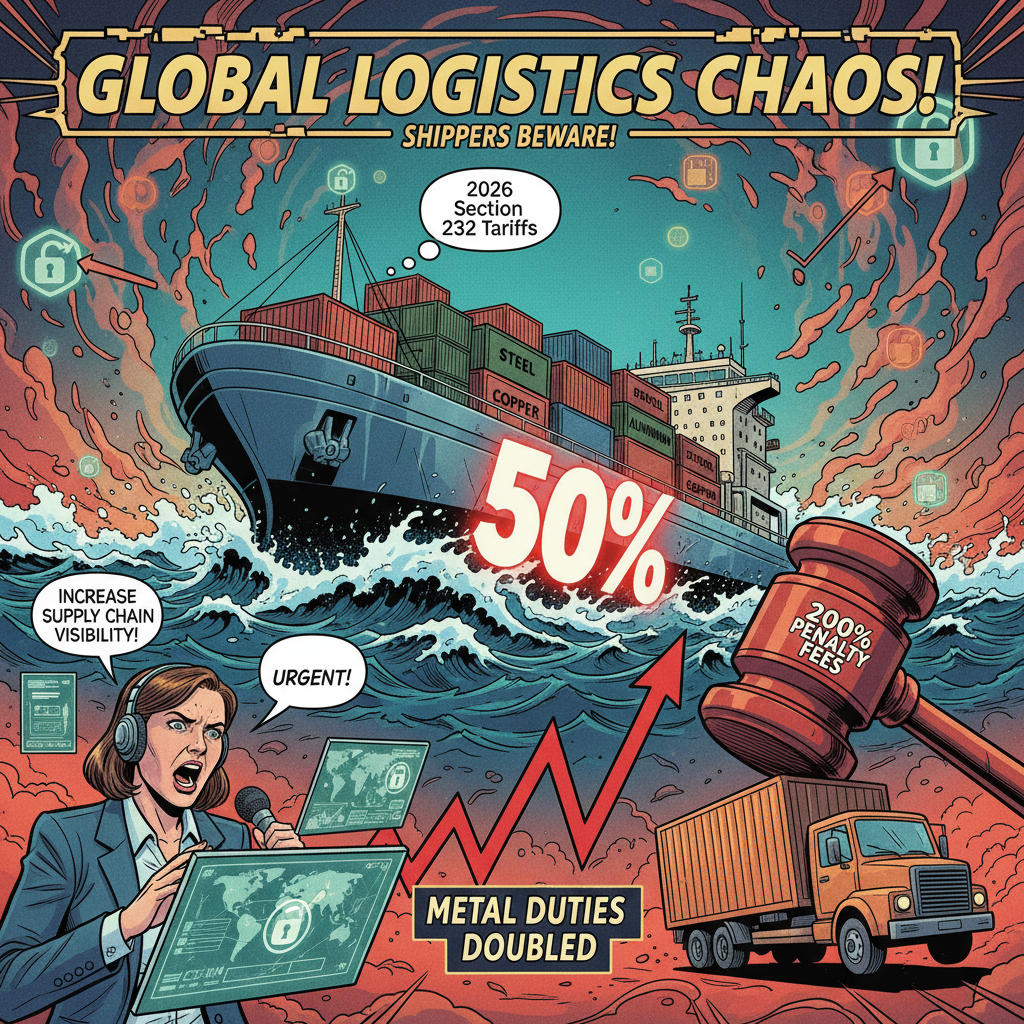
The global logistics landscape is facing unprecedented disruption as recent U.S. government mandates drastically alter the Section 232 Tariff Supply Chain Impact. Following aggressive trade policy shifts between 2025 and 2026, tariffs on imported steel and aluminum products have surged, doubling to 50% for most nations. Furthermore, these duties are now calculated on the full customs value of derivative goods rather than just the raw metal content. This fundamental change in duty calculation is driving up landed costs and forcing logistics experts to completely reassess international sourcing strategies.
Beyond massive cost increases, shipping professionals are grappling with severe administrative and regulatory hurdles. The latest Section 232 enforcement mandates intense supply chain visibility, requiring importers to definitively prove the country of smelt, cast, melt, and pour. A critical loophole that previously allowed importers to declare metal origins as unknown was officially closed in June 2025. Today, undocumented or untraceable metals face a crippling 200% penalty duty. Consequently, obtaining mill test certificates and detailed supplier attestations is no longer optional but a baseline survival requirement.
- Enhance digital supply chain tracking to verify smelt and pour origins down to the raw material level.
- Re-evaluate Foreign Trade Zone (FTZ) utilizations, as new regulations force Section 232 goods into Privileged Foreign Status, limiting traditional duty reduction benefits.
- Diversify manufacturing hubs toward domestic or compliant allied markets to avoid extreme tariff stacking.
Ultimately, surviving the Section 232 Tariff Supply Chain Impact demands extreme agility. Logistics leaders must prioritize end-to-end transparency and proactive compliance mapping.