
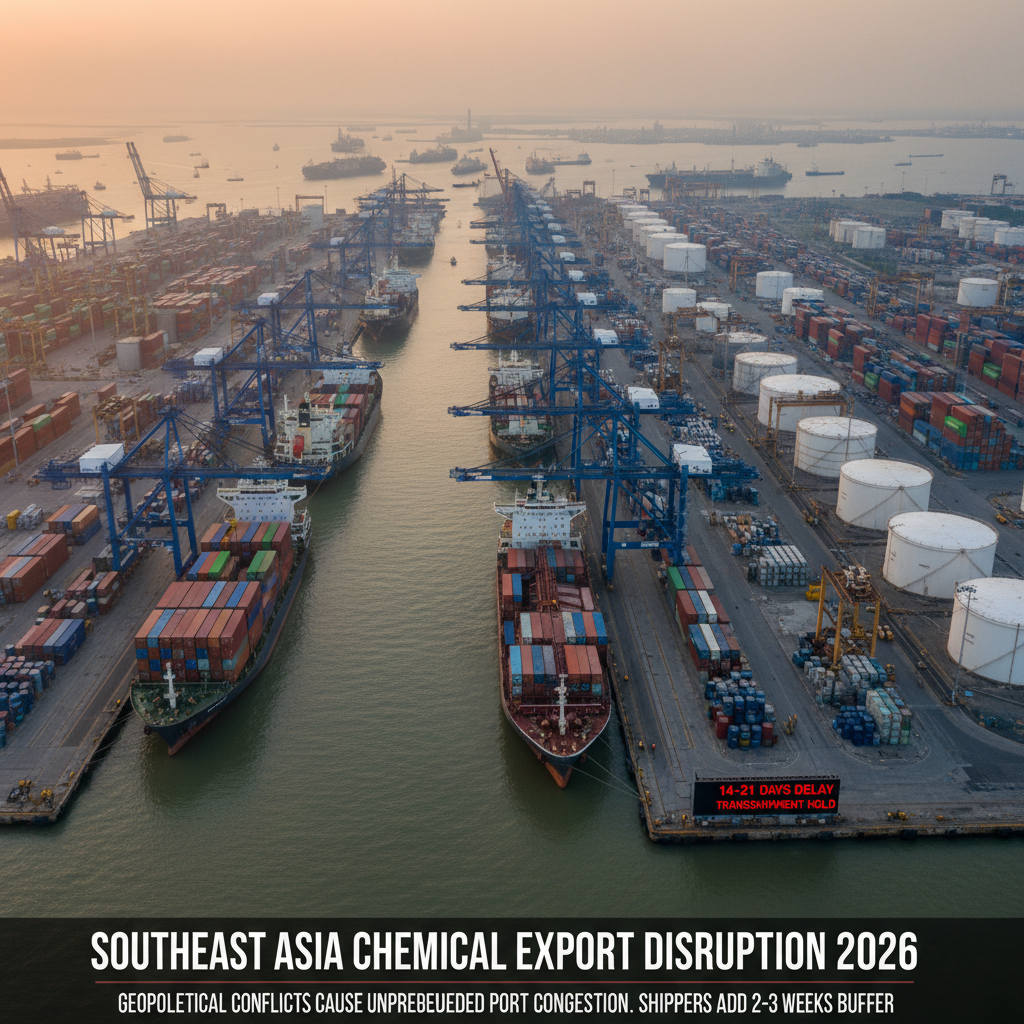
In 2026, the global logistics sector is grappling with unprecedented Southeast Asia chemical export port congestion, heavily driven by geopolitical tensions and disrupted shipping networks. With recent Middle East escalations forcing the closure of key maritime corridors, ocean carriers are rerouting around the Cape of Good Hope. This diversion has triggered severe vessel bunching at critical transshipment hubs, transforming Singapore, Port Klang, and Tanjung Pelepas into massive bottlenecks for chemical cargo.
Recent maritime risk reports highlight alarming volatility in regional transshipment schedules. The Port of Singapore recently recorded a staggering 65% surge in transshipment changed exceptions, while ongoing delays across key Southeast Asian hubs have placed an estimated $131 billion in global trade at risk. For specialized chemical logistics, this prolonged port congestion translates directly to acute equipment shortages, high yard density, and escalating demurrage costs.
To survive this volatile landscape, industry experts strongly recommend adapting logistics planning immediately. Shippers handling chemical exports must implement the following resilience strategies:
- Allocate an additional buffer time of 14 to 21 days for time-bound deliveries.
- Leverage alternative regional gateways to bypass bottlenecks in Singapore and Malaysia.
- Monitor real-time vessel movements to manage hazardous material storage safely.
Proactive inventory staging is now an essential protocol for mitigating the financial fallout of this crisis.
References
- Windward Q2 Maritime Risk Report (windward.ai)
- Swire Shipping Advisory (swireshipping.com)
- The Business Times (businesstimes.com.sg)
- Flexport Freight Network Update (flexport.com)