

Navigating the Arctic Ice Silk Road: The 2026 Scheduled Service Shift
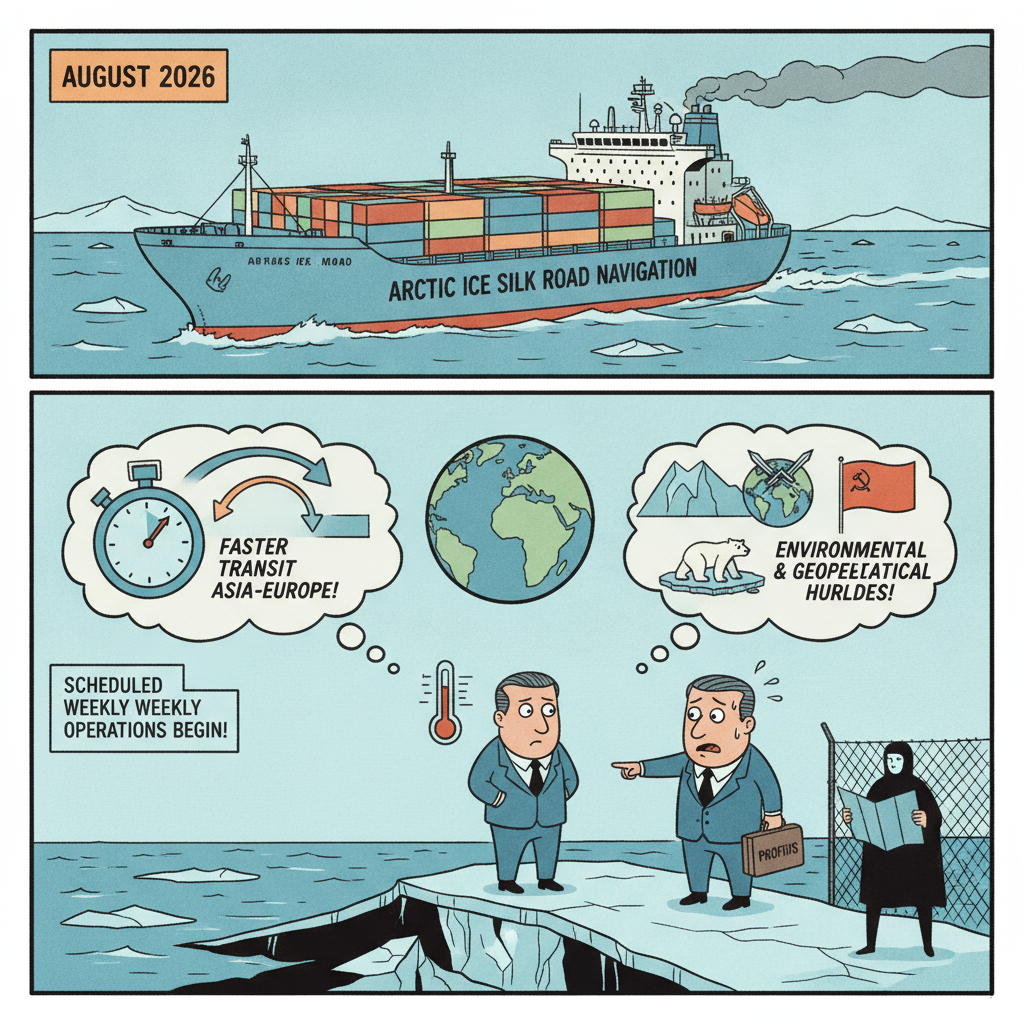
For maritime experts, Arctic Ice Silk Road Navigation fundamentally shifted from experimental to commercial reality in Q3 2026. In August 2026, Chinese operator Sea Legend launched the first scheduled weekly China-Europe Arctic container service, utilizing a multi-port consolidation model. This dramatically reduces transit times to roughly 20 days from Ningbo to Felixstowe, effectively bypassing geopolitical disruptions in the Red Sea.
Cargo Volumes and Commercial Viability
Data indicates steady regional growth, with the Northern Sea Route (NSR) recording 103 transit voyages and 3.2 million tons of cargo during the 2025 season. Recognizing this potential, major freight forwarders like Davies Turner recently integrated this seasonal route into their Full Container Load (FCL) offerings. The corridor currently serves as a premium lane for time-sensitive cargo, particularly new energy vehicles.
Industry Constraints
Despite distance advantages, widespread adoption faces critical barriers:
- Environmental Boycotts: Western carriers like MSC and Hapag-Lloyd actively avoid the Arctic to mitigate ecological damage and polar ice melt.
- Geopolitical Risks: The route mandates Russian icebreaker permits, presenting major compliance challenges amid ongoing Western sanctions.
- Operational Limits: Unpredictable ice conditions restrict the viable navigation window to mere months.
While Arctic Ice Silk Road Navigation provides a vital workaround for niche exports today, logistical complexities ensure it remains an alternative rather than a direct replacement for the Suez Canal.