

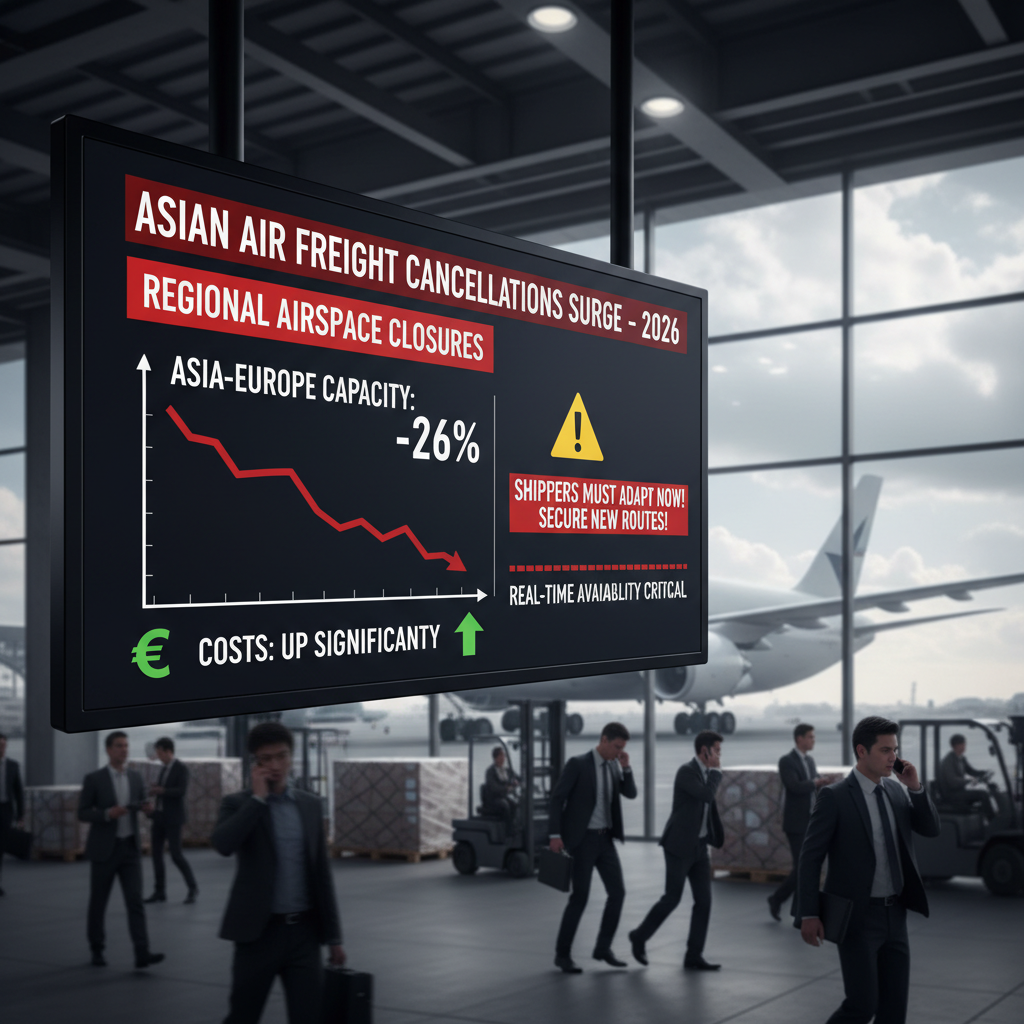
The global logistics sector is grappling with severe supply chain disruptions. A rapid increase in Asian Air Freight Cancellations is forcing logistics managers to rethink their forwarding strategies. Ongoing airspace closures in the Middle East have severely restricted traditional cargo routes.
Industry reports reveal the staggering impact of these disruptions. According to logistics leaders, almost 20% of global air freight capacity has been eliminated due to closed airports. Furthermore, capacity along the critical Asia-Europe corridor has plummeted by 26%. The main factors driving Asian Air Freight Cancellations include:
- Airspace Restrictions: Flight path closures force planes to take longer routes, adding up to three hours to transit times.
- Payload Reductions: Longer flights require more fuel, leaving less weight capacity for actual cargo.
- E-commerce Pressures: Surging direct-to-consumer exports clash with restricted flight schedules.
Reduced capacity translates directly to soaring transportation costs. Exporters face substantial rate hikes, with cargo rates out of South Asia jumping by more than $1 per kilogram. Shippers must now navigate volatile pricing and war-risk surcharges. To mitigate these effects, forwarders should secure advance bookings and diversify transport modes.