

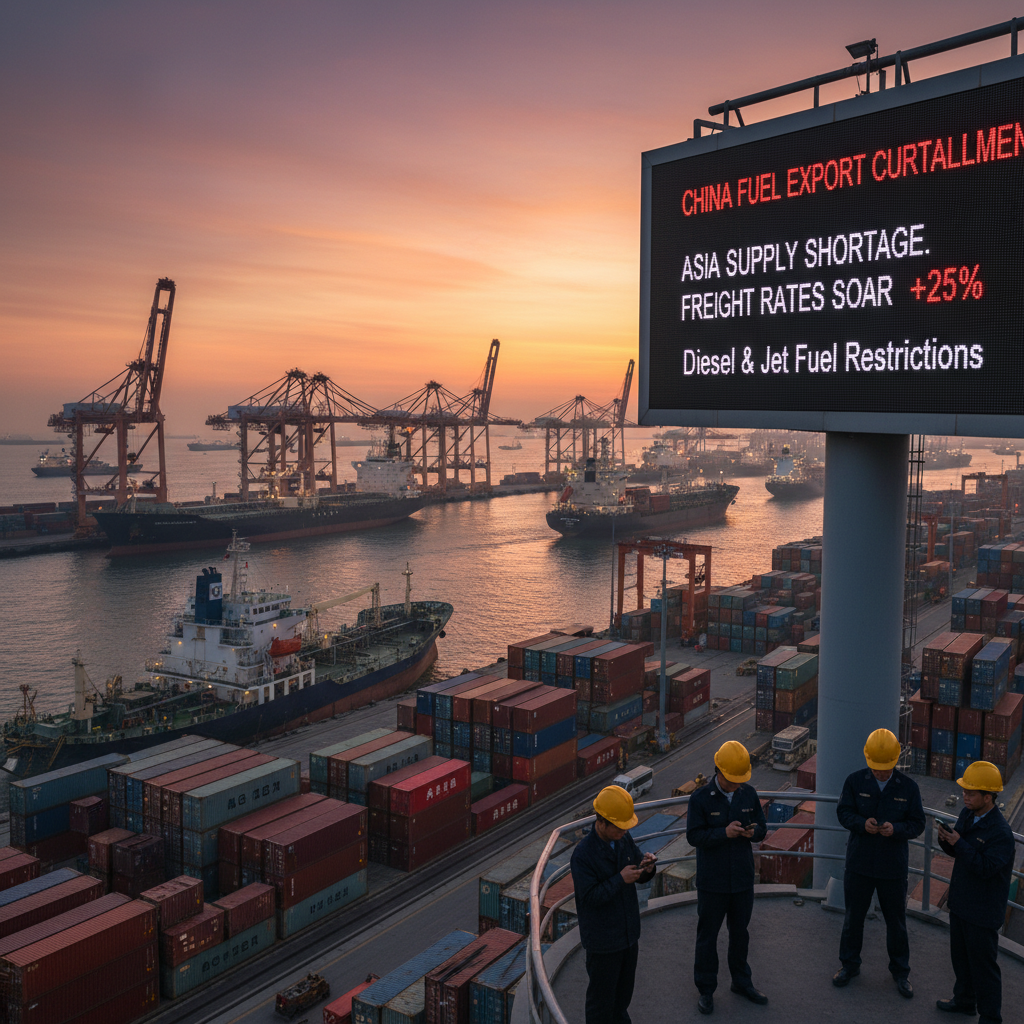
In early 2026, the sudden China refined fuel export curtailment sent shockwaves through global energy markets. Driven by domestic energy security concerns and Middle East crude supply disruptions, Beijing drastically reduced outbound shipments of diesel, gasoline, and jet fuel.
Recent tanker tracking data highlights a massive operational shift. During the first two weeks of April 2026, non-Hong Kong shipments plunged to just 320,000 metric tons, representing a mere one-sixth of the volume recorded during the same period last year. The National Development and Reform Commission verbally directed refiners to suspend new export contracts, tightening regional availability for major importing nations like Australia, Vietnam, and the Philippines.
For logistics and shipping experts, the China refined fuel export curtailment introduces immediate operational hurdles. As Asian supply shortages emerge, regional importers are forced to secure alternative suppliers, extending vessel transit times. Furthermore, this disruption puts upward pressure on transatlantic shipping rates as product tankers are repositioned globally.
- Elevated maritime freight rates for clean product tankers.
- Increased competition in the Atlantic basin for diesel.
- Strategic reserve releases by importing nations.
Fleet operators must adapt by diversifying fuel procurement networks and leveraging bonded marine bunkering, which currently remains exempt from the strict quota limitations. Proactive route planning will be essential to mitigate cost inflations through 2026.
References
- mexc.com – Global Energy Market Implications
- spglobal.com – China slashes oil product exports to ensure domestic supply
- thestandard.com.hk – China curtailing, not banning fuel exports
- youtube.com – China Moves To Halt New Refined Fuel Export Deals
- youtube.com – China reportedly orders ban on refined fuel exports