

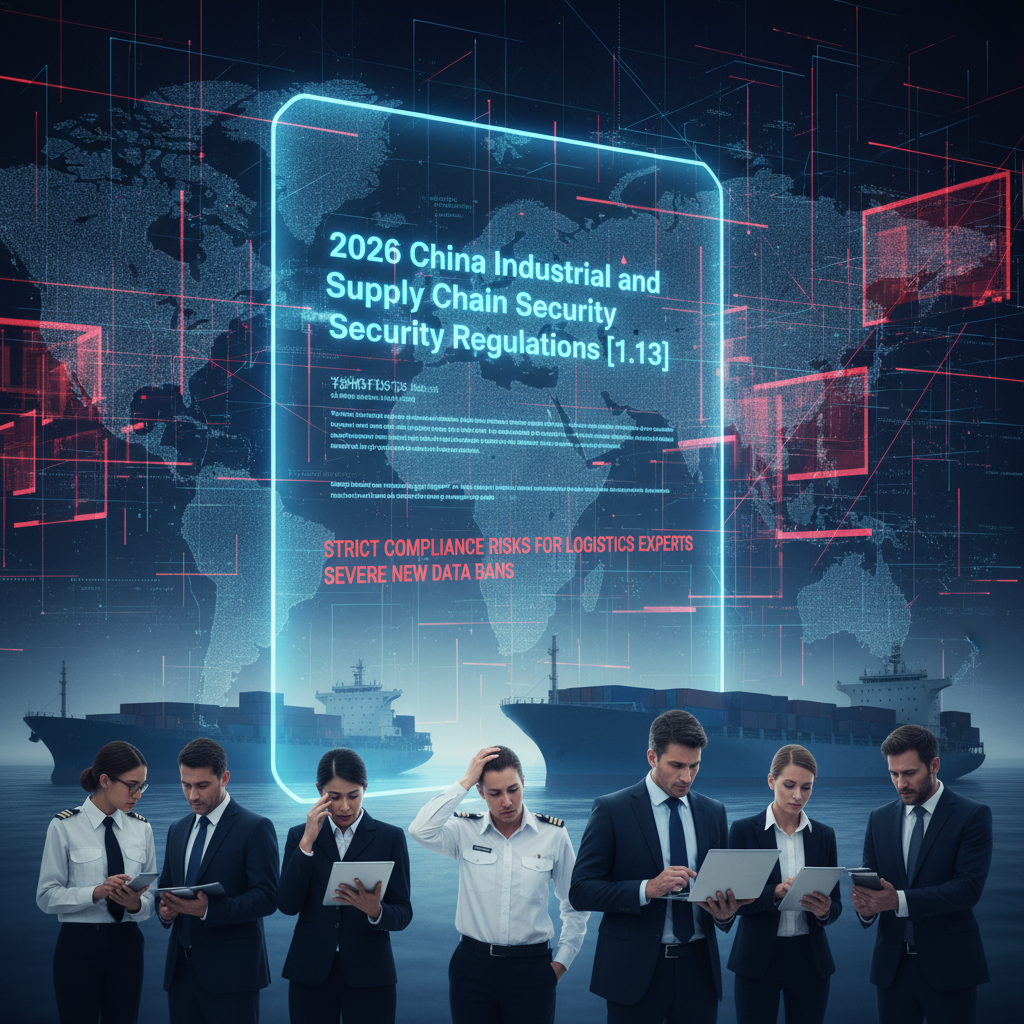
Logistics and shipping experts face unprecedented compliance challenges following the sudden enforcement of the China Industrial and Supply Chain Security Regulations [1.13] on April 7, 2026. This sweeping legislative framework consolidates export controls and anti-sanctions provisions under a unified national security mandate, monitored by over 15 government agencies.
Designed to counter external geopolitical threats, the mandate shifts China’s regulatory posture from reactive to proactive behavioral deterrence. For multinational shipping lines and logistics providers, this means routine commercial decisions, such as exiting a market or halting supplies to specific counterparties, can now trigger severe enforcement actions. Crucially, the framework introduces extreme restrictions on supply chain mapping, creating acute vulnerabilities for firms conducting ESG due diligence or forced labor audits.
The immediate implementation of these rules necessitates rapid operational adjustments. Experts indicate that the framework empowers the State Council to impose direct countermeasures, including investment bans, on entities violating Chinese laws during supply chain audits. Key implications for the logistics sector include:
- Heightened Scrutiny: Routine supply chain data collection may be classified as illegal information gathering.
- Compliance Conflicts: Adhering to US or EU directives could directly violate these new security mandates.
- Reciprocal Actions: Discriminatory moves against Chinese networks can result in retaliatory export restrictions.
References
- https://changeflow.com
- https://china-briefing.com
- https://squirepattonboggs.com
- https://scmp.com
- https://globaltimes.cn
- https://morganlewis.com