

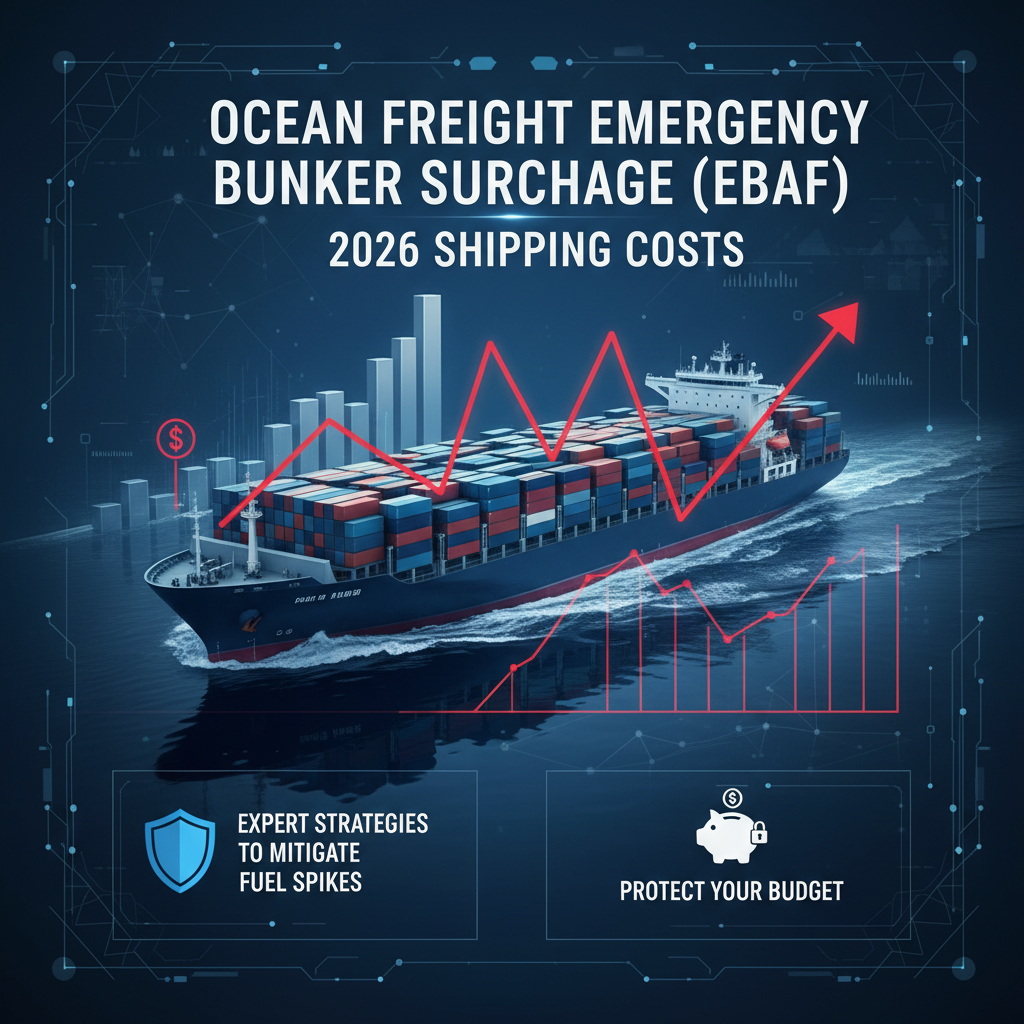
As global supply chains navigate ongoing volatility in 2026, the Ocean freight Emergency Bunker Surcharge EBAF remains a critical cost factor for logistics professionals. Unlike the standard Bunker Adjustment Factor (BAF) which accounts for routine fuel price fluctuations, EBAF is a temporary fee implemented by carriers during rapid, unexpected spikes in fuel costs. This sudden surge often stems from geopolitical conflicts, such as the Red Sea hostilities that necessitated extended Africa-round sailings, or disruptions in major bunkering ports.
The implementation of this emergency surcharge typically targets long-haul routes, prominently affecting Asia-Europe and Transpacific trade lanes. Because these fees are implemented on a per-carrier basis with usually a 30-day notice, they create significant budgeting challenges for supply chain managers. Shippers must recognize that these additional fees are layered on top of base freight rates to protect carrier profitability during extraordinary circumstances.
To mitigate sudden cost increases, industry experts recommend proactive negotiation and strategic planning. Key tactics for logistics managers include:
- Contract Caps: Include surcharge caps in service contracts to stabilize budgets.
- All-Inclusive Rates: Negotiate comprehensive freight rates that absorb emergency spikes.
- Market Monitoring: Track global oil price trends to anticipate surcharges before they impact landed costs.
References: https://www.freightamigo.com/understanding-emergency-bunker-surcharges, https://cargoenter.com/ebs-emergency-bunker-surcharge-explained, https://www.nzgsta.co.nz/ocean-freight-market-update